
Why Legacy SaaS Management Now Fails in AI-First Enterprises
Legacy SaaS management fails in AI-first enterprises in 2026 because it tracks only static, IT-approved licenses for SaaS and AI apps. At the same time, AI-first environments rely on shadow AI, autonomous agents, embedded AI features, and usage-based pricing that spreadsheet-era tools cannot discover or govern.
And according to a Gartner survey, more than 56% of CSCOs say integrating AI with legacy systems and processes is a major challenge for them. However, SaaS and AI app management software, CloudFuze Manage, supports the transition from the old legacy system without losing your IT control.
This blog post breaks down what legacy SaaS management is and why it fails in AI-first enterprises.
Key Takeaways
What Is Legacy SaaS Management and Why Does It Matter?
Legacy SaaS management refers to outdated management systems that are unable to handle the problems that arise with modern AI-driven environments. These systems lack the agility, scalability, and comprehensive visibility needed by AI-first enterprises.
For example, your procurement lead is blindsided by a $240K auto-renewal on an artificial intelligence platform that 60% of the team no longer uses, because they rely on a legacy SaaS governance system rather than an advanced AI governance tool like CloudFuze Manage.
Why Legacy SaaS Management Fails Now at AI-First Enterprises
Many companies use the traditional SaaS management tool to manage and govern their AI apps, too. That’s the reason why your outdated software management approach fails. Other reasons include:
1. Shadow AI and AI Agent Sprawl
Unmanaged or unapproved AI agents can lead to data sprawl and security breaches. They expand your company’s attack surface and expose your confidential business data.
2. SaaS Governance and IT Compliance Risks
Integrating AI features into your SaaS apps complicates compliance with your company’s internal and external data privacy regulations, and legacy systems often lack the necessary IT controls and visibility into your broader app environment.
3. Scalability Issues
Traditional SaaS management tools track only SaaS licenses, their usage, and cost, and struggle to scale with AI-driven operations. This, in turn, causes technical inefficiencies and increased IT costs.
The Common Pitfalls of Using Legacy SaaS Management for AI-Led Enterprises
These are the drawbacks that AI-first enterprises find lacking in their legacy systems:
- Outdated IT management systems often lack 360-degree IT visibility. This makes it hard for IT admins to accurately track their org-wide AI agents and SaaS usage.
- Most legacy systems are designed to track static software licenses and usage, and aren’t built for the dynamic nature of AI-first business models
- Without proper AI governance controls, legacy systems can expose your enterprise data to compliance and security risks.
Why AI-First Enterprises Need a New AI Governance Approach
Here’s what the gap between outdated SaaS management and AI governance looks like:
| Capability | With Outdated SMPs | With CloudFuze Manage |
|---|---|---|
| IT Visibility | Fragmented, limited IT insight | 360-degree AI app and agent visibility |
| AI Agent Management | Uncontrolled agent sprawl | Centralized and AI-governed oversight |
| IT Compliance | High risk of data breaches | Audit-ready reports |
| Cost Management | Unchecked cost creep | Optimized cost controls |
| IT Security | Vulnerable to security threats | Robust, AI-specific security measures |
| Shadow AI Discovery | Discovers shadow SaaS | Continuous Shadow IT & AI discovery |
| AI Usage Analytics | Minimal and no AI usage information | Token consumption, usage, and adoption metrics |
Best Practices for Saas Management in AI-First Enterprises Compared to Legacy Methods
Here’s what IT teams that effectively manage SaaS and AI apps together do differently:
- Make sure to enhance your IT visibility by continuously tracking SaaS apps and AI agents to reduce manual provisioning work.
- Always centralize AI and SaaS governance into one governance framework to manage AI and SaaS applications effectively.
- Run regular automated data governance checks to stay aligned with industry data privacy regulations.
- Audit SaaS and AI application license usage regularly to remove shelfware and right-size your license costs.
- Remember to grant users only the permissions (least-privileged access) required for their work roles.
How CloudFuze Manage Supports Transition to AI-First Approaches
Our SaaS and AI app management platform, CloudFuze Manage, tackles the legacy system transition challenges head-on with its powerful features, such as:
- Discovery: You can automatically identify and govern shadow AI and SaaS sprawl across 190+ leading apps (HubSpot, Insightful, Salesforce, Claude, Copilot, and more).
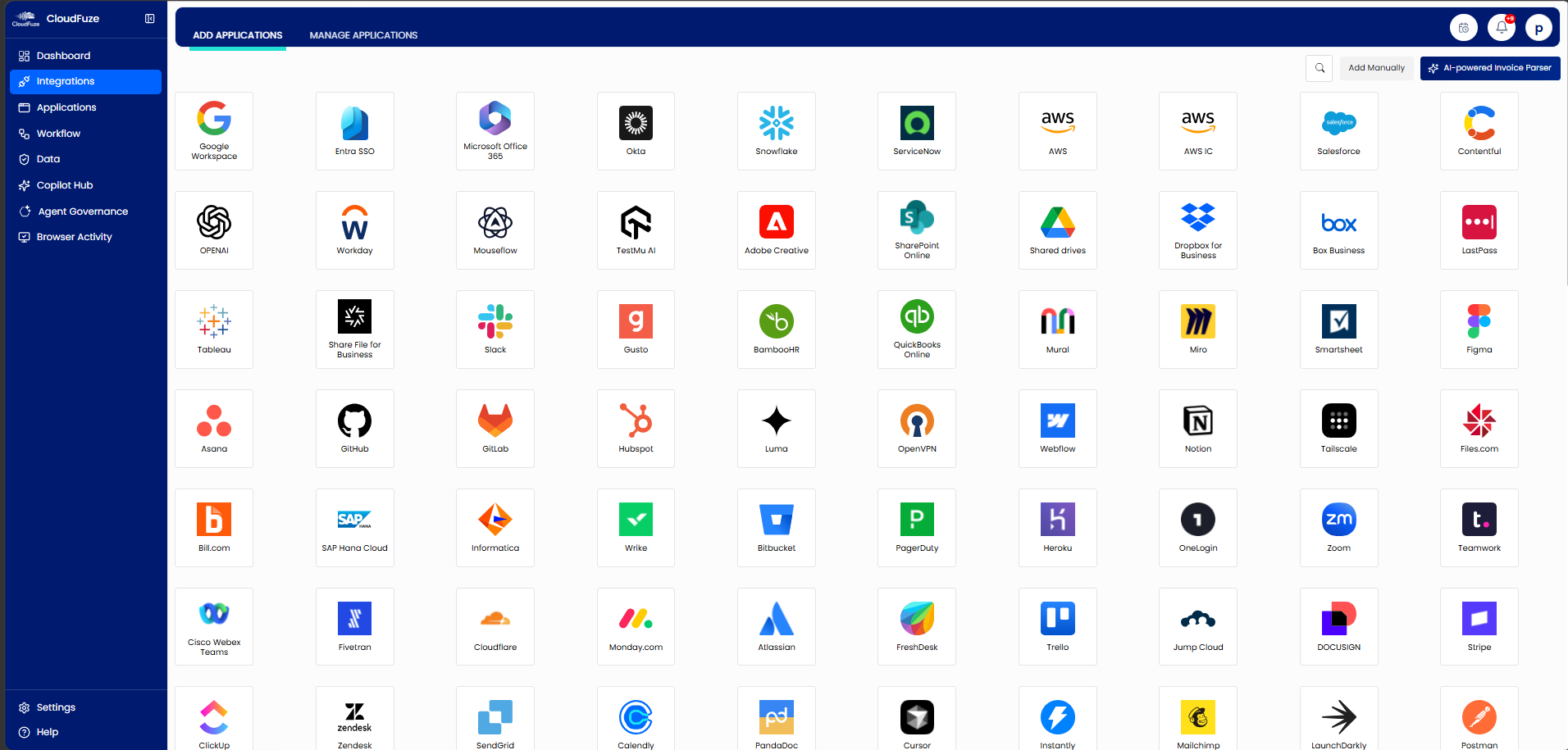
- License Optimization Insights: IT executives can optimize and right-size SaaS and AI licenses to prevent cost creep using our AI chat agent, Manage AI.
- User Lifecycle Automation: IT admins can manage app access of their employees and deprovisioning (Employee Lifecycle) efficiently to ensure role-specific access is given for their employees.
- Compliance Reporting: Compliance-focused teams can maintain audit-ready compliance with built-in SaaS and AI governance features as well.

Use Case: A 400-person AI-first company reduced its SaaS costs by 30% and achieved AI and agent governance (all-in-one) using CloudFuze Manage.
Streamline Your SaaS and AI App Management with CloudFuze Manage
Legacy SaaS management can no longer deal with the complexities of your AI-first enterprises. However, our platform, CloudFuze Manage, offers a single command centre to overcome every SaaS and AI app management challenge.
Take our free AI readiness assessment to see how prepared your SaaS environment is for AI-first growth.
Schedule your free demo to see how CloudFuze Manage can elevate your SaaS and AI management!
Frequently Asked Questions
1. What are the biggest SaaS management challenges unique to AI-first companies?
AI-first companies experience challenges like shadow AI sprawl, IT-related compliance complexities, and inefficient legacy systems that struggle to manage dynamic AI-driven operations.
2. Which SaaS management tools best support AI-driven business models?
SaaS and AI app management tools like CloudFuze Manage provide 360-degree IT visibility, AI agent governance, and data compliance automation. This supports the unique needs of your AI-driven enterprises.
3. What solutions ensure compliance with data privacy regulations across AI-related SaaS?
Solutions like CloudFuze Manage help maintain audit-ready logs, which ensure compliance with data privacy laws (GDPR, ISO 27001, and SOC 2 Type 2).
4. How do AI-first enterprises handle SaaS compliance and security risks?
AI-first enterprises utilize centralized data governance frameworks and robust security measures, like those provided by CloudFuze Manage, to mitigate compliance and security-related risks.
5. What are the key security considerations for integrating AI models with external SaaS?
You must implement standard role-specific data access controls, regular IT security audits, and compliance checks to protect your external SaaS systems before connecting to any AI models.
About the Author: Rashmi Ramesh



