
How to Migrate Slack Pinned Messages to Microsoft Teams?
Migrating pinned messages from Slack to Teams can be challenging, particularly due to the difference in pinned message functionality between the two platforms. While Slack allows users to pin multiple messages, Microsoft Teams restricts pinning to only one message in a single chat.
However, moving these pinned messages to preserve important information is critical. This article delves into the significance of pinned messages, explores why migrating them from Slack to Teams is essential, and outlines how CloudFuze streamlines the migration process.
What are Pinned Messages?
Pinned messages are specific messages within a chat that are marked and kept at the top of the conversation. They act as a virtual bulletin board, providing quick access to essential content. Team members can use them to highlight critical information, announcements, milestones, or references they need to refer to frequently.
How Pinned Messages Work in Slack vs. Microsoft Teams
Both chat messaging platforms support pinning. The way pins are displayed and organized differs, and that difference shapes how they migrate.
| Feature | Slack | Microsoft Teams |
|---|---|---|
| Where you can pin | Channels and direct messages | Direct messages, group chats, and channels |
| How pins are displayed | A Pins tab in the conversation header list all pinned messages | The pinned message appears as a banner at the top of the chat |
| Who can see pins | Every member of the conversation | Every member of the chat |
| How pins are used | Often several reference items per channel | Usually one key message kept at the top |
In Slack, users often build up many pins in a channel over months or years. Microsoft Teams puts a single pinned message front and center at the top of a chat.
A migration therefore has to decide which Slack pins become the pinned messages in Microsoft Teams, so that users don’t lose their most important reference.
Why Migrate Slack Pinned Messages to Microsoft Teams?
Using pins, teams can effectively communicate updates, deadlines, and decisions, making it easier for team members to locate relevant information quickly and ensure everyone is on the same page.
The successful migration of pinned messages ensures that valuable insights and references are retained, enabling teams to continue their work without disrupting the new Teams environment.
What Happens if Pinned Messages are Left Out of The Migration?
Pinned messages usually hold the information users depend on. That includes project briefs, onboarding instructions, meeting links, approved decisions, and escalation contacts.
When pins are left out of a migration, the message text may still exist somewhere in the history, but the shortcut to it is gone.
The impact shows up quickly after cutover:
- Users lose their reference points
- Help desk tickets can increase
- Adoption can slow down
- Context gets separated from content
How to Migrate Slack Pinned Messages to Microsoft Teams?
CloudFuze, a robust cloud migration platform, simplifies migrating pinned messages from Slack to Teams.
In addition to migrating pinned messages, the move from Slack to Teams often involves transferring all the important conversations, such as text messages, group messages, emojis, @mentions, attachments, threads, timestamps, replies, and files.
CloudFuze serves as a reliable solution for migrating data from Slack to Teams, allowing organizations to preserve all the conversations of Slack workspace.
Due to the difference in pinned message functionality between the platforms, CloudFuze migrates the latest pinned message from Slack to Teams, regardless of whether it is a one-to-one or group chat.
The images below show how the pinned messages are migrated from Slack to Teams using the CloudFuze platform.
Migrating pinned messages in Slack one-one chat to Microsoft Teams.
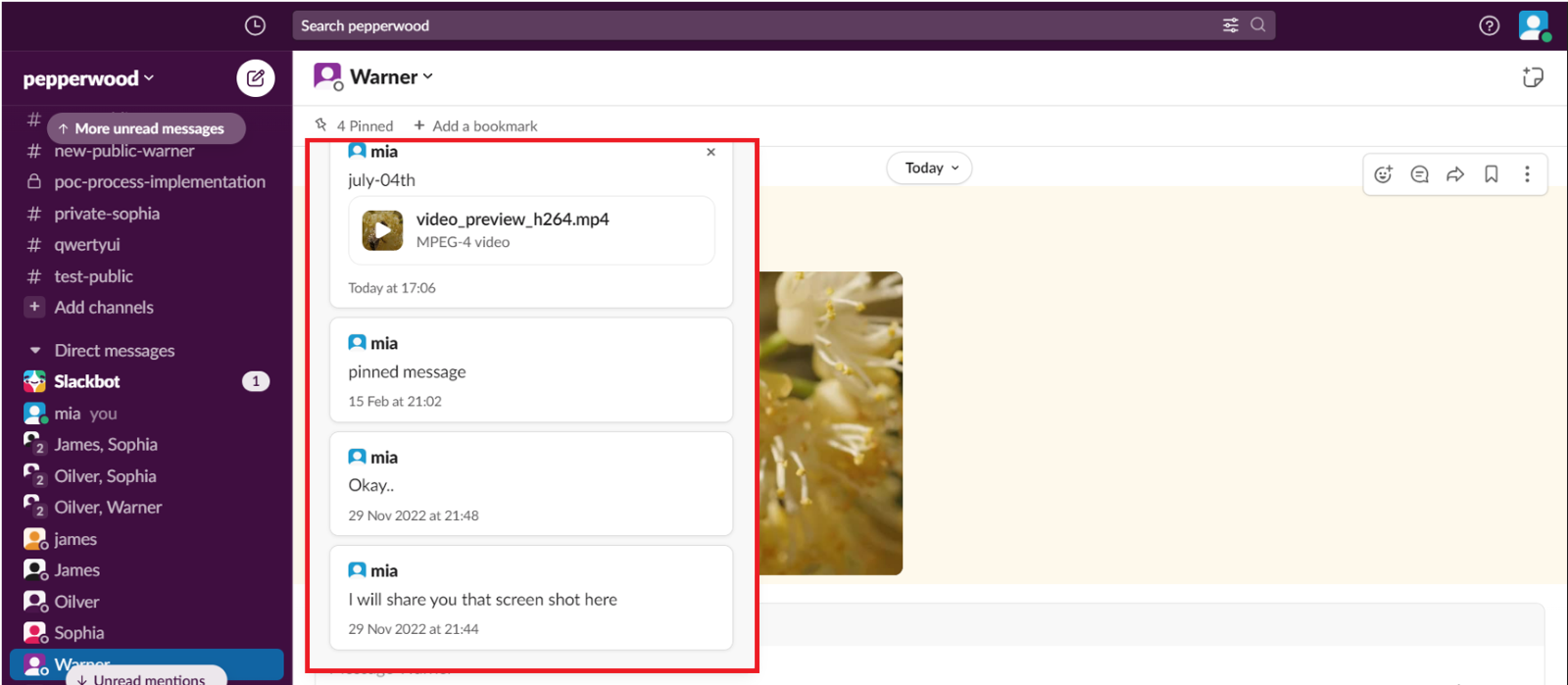
The latest pinned message, I.e., video, will be migrated to Warner-Mia chat in Teams, as shown in the image below.

Contact us and schedule a live demo to learn how CloudFuze migrates all the Slack workspace conversations to Teams, including pinned messages.
How to Prepare Slack Pinned Messages Before Migration
A short review of your pins before migration makes sure the right message ends up pinned in Teams. Walk through these steps with channel owners and team leads:
- Audit your pins
- Remove outdated pins
- Choose the one pin that matters the most
- Let users know which pin will appear in Microsoft Teams after the migration
How to Validate Pinned Messages in Microsoft Teams After Migration?
After migration, validate a sample of chats to confirm pin content arrived correctly.
- Open migrated direct messages and group chats and confirm the pin message banner shows the expected message.
- Open the pinned message and confirm it opens its attachments or media content.
- Collect user feedback by asking channel owners to flag any conversation where an important reference is missing.
Performing these validation steps helps ensure all pinned messages are retained, and users are able to continue where they left off.
Ready to Move your Slack Messages with Pins Intact?
Understand how our migration tool helps you replicate your Slack message’s pinned status in Microsoft Teams. Get a free demo or POC today. Contact us.
Frequently Asked Questions
1. Can you migrate pinned messages from Slack to Microsoft Teams?
Yes. CloudFuze migrates pinned messages as part of Slack to Microsoft Teams migration. The latest pinned message in each chat is carried over and appears pinned in the matching Microsoft Teams chat.
2. Does CloudFuze migrate pinned messages from both direct messages and group chats?
Yes. CloudFuze migrates the latest pinned messages from both direct messages and group chats in Slack to the corresponding chats in Microsoft Teams.
3. What other Slack data migrates along with pinned messages?
CloudFuze Migrate all types of messaging properties and features, such as emojis, mentions, attachments, threads, timestamps, and replies alongside pinned messages. As a result, conversations arrive in Microsoft Teams with their original context.
About the Author: Pankaj Rai


