
When to Consolidate Your SaaS Stack: 5 Executive Signals
The SaaS market is expected to grow at a CAGR of 15.83% between 2026 and 2035, according to the Business Research Insights report. This clearly indicates that SaaS adoption across all businesses will continue to grow in the near future as well.
With these growing SaaS adoption trends, CIOs, CTOs, and IT executives are struggling hard to streamline their organization’s digital stack manually.
In order to simplify these IT workloads, every organization must own a dedicated SaaS & AI app management software that offers reports to consolidate its SaaS stack.
In this blog post, you’ll discover the 5 executive-level signals that indicate it’s time to consolidate SaaS applications.
Key Takeaways:
What Does It Mean to Consolidate a SaaS Stack?
SaaS stack consolidation means reducing, reorganizing, and optimizing all the cloud-based SaaS applications your organization uses.
For example, your organization’s teams use Asana, Trello, and Monday.com for project management. Instead of using three different project management tools, consolidating on a single platform eliminates redundant IT tools, reduces software costs, and simplifies your organization’s renewal management.
What Are the Common Executive Signals for Consolidating a SaaS Stack?
Check these 5 executive signals and consider SaaS stack consolidation if your organization encounters some of them:
Signal 1: Rapid SaaS Sprawl and Redundant SaaS Applications
Your IT teams discover multiple similar function tools that perform the same task (e.g., 4 project management apps across your marketing, sales, and QA departments).
Signal 2: Rising IT Workload and Low IT Operational Efficiency
Your IT teams spend more time managing hundreds of SaaS tools than enabling innovation.
Signal 3: Annual Budget Pressure and Subscription Waste
Your finance teams struggle with forecasting their annual IT budget, subscription auto-renewals, shadow IT subscriptions, and software license sprawl.
Signal 4: Increasing SaaS Security Risks and Shadow IT
Your organizational teams lack clear IT visibility into who uses what and where data flows in every SaaS application.
Signal 5: The Push Toward Unified Automated SaaS Management Platform
Your business wants IT automation, app consolidation insights, and security, as your current tools are too fragmented.
Why Is Consolidating Your SaaS Stack Important for Organizations?
SaaS stack consolidation helps organizations to:
- Reduce their SaaS subscription waste by up to 30%
- Simplify their IT operations as fewer consolidated SaaS tools reduce context-switching and IT admin workload.
- Strengthen SaaS governance by centralizing their app portfolio into fewer apps.
- Right-size their software license needs and forecast future license needs.
Overall, consolidation helps SMBs and large enterprises consolidate overlapping SaaS applications into a cleaner SaaS ecosystem that supports their business without any unnecessary operational complexity.
How Can Organizations Effectively Consolidate Their SaaS Stack?
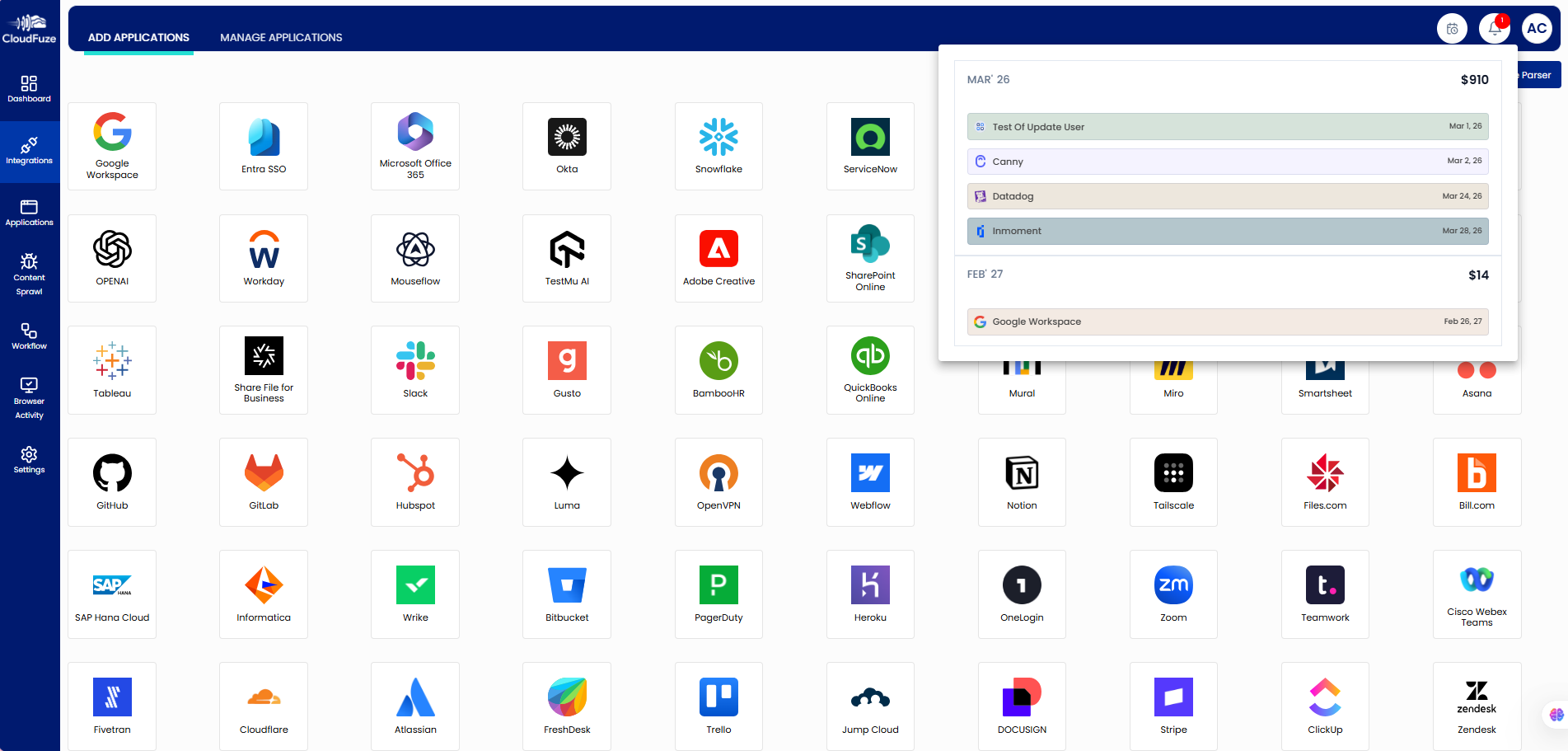
Every organization can consolidate its SaaS applications using our SaaS & AI app management platform, CloudFuze Manage.
Here’s how our platform helps in SaaS stack consolidation and IT automation:
- Deep SaaS Discovery: Organizations can automatically discover all SaaS apps, including Shadow IT.
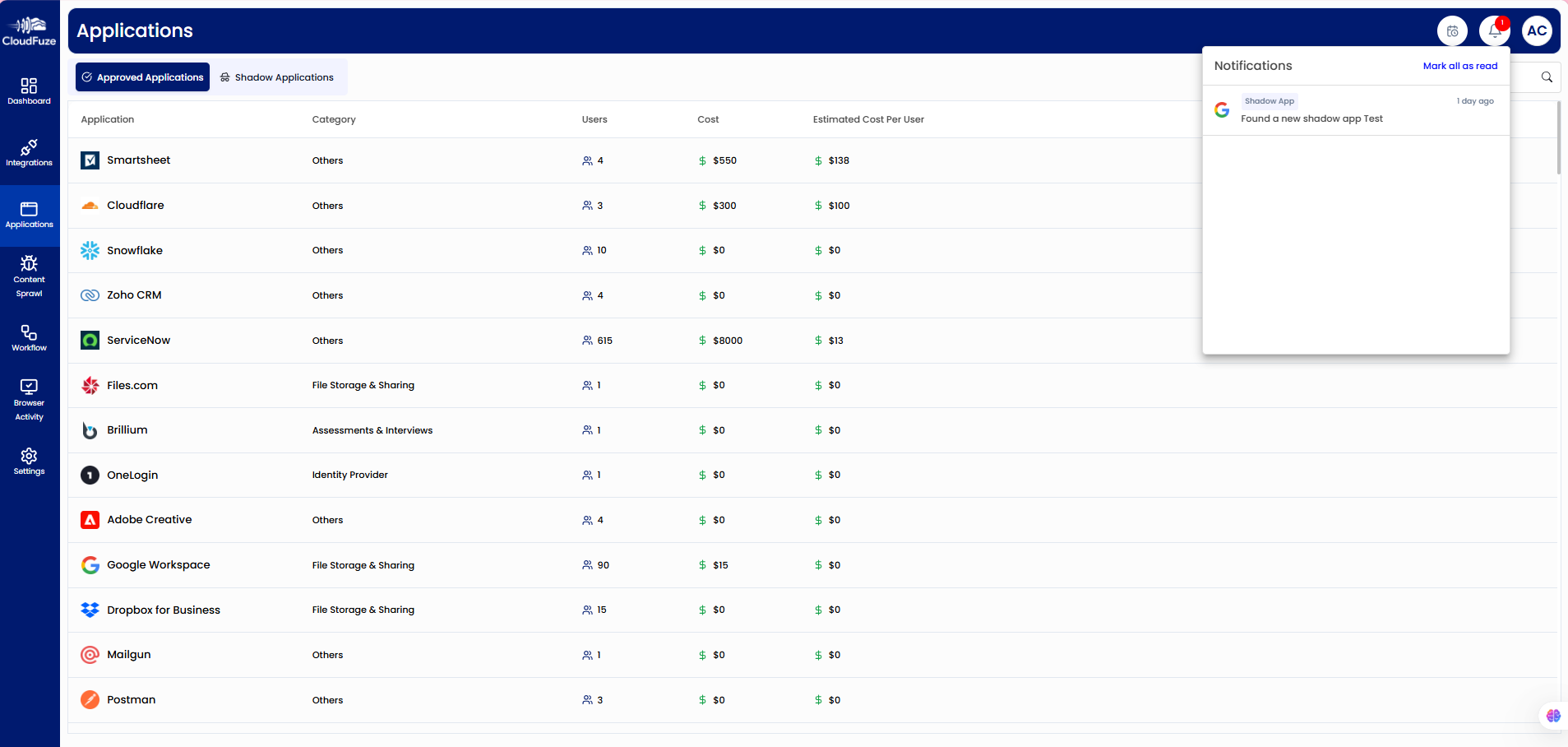
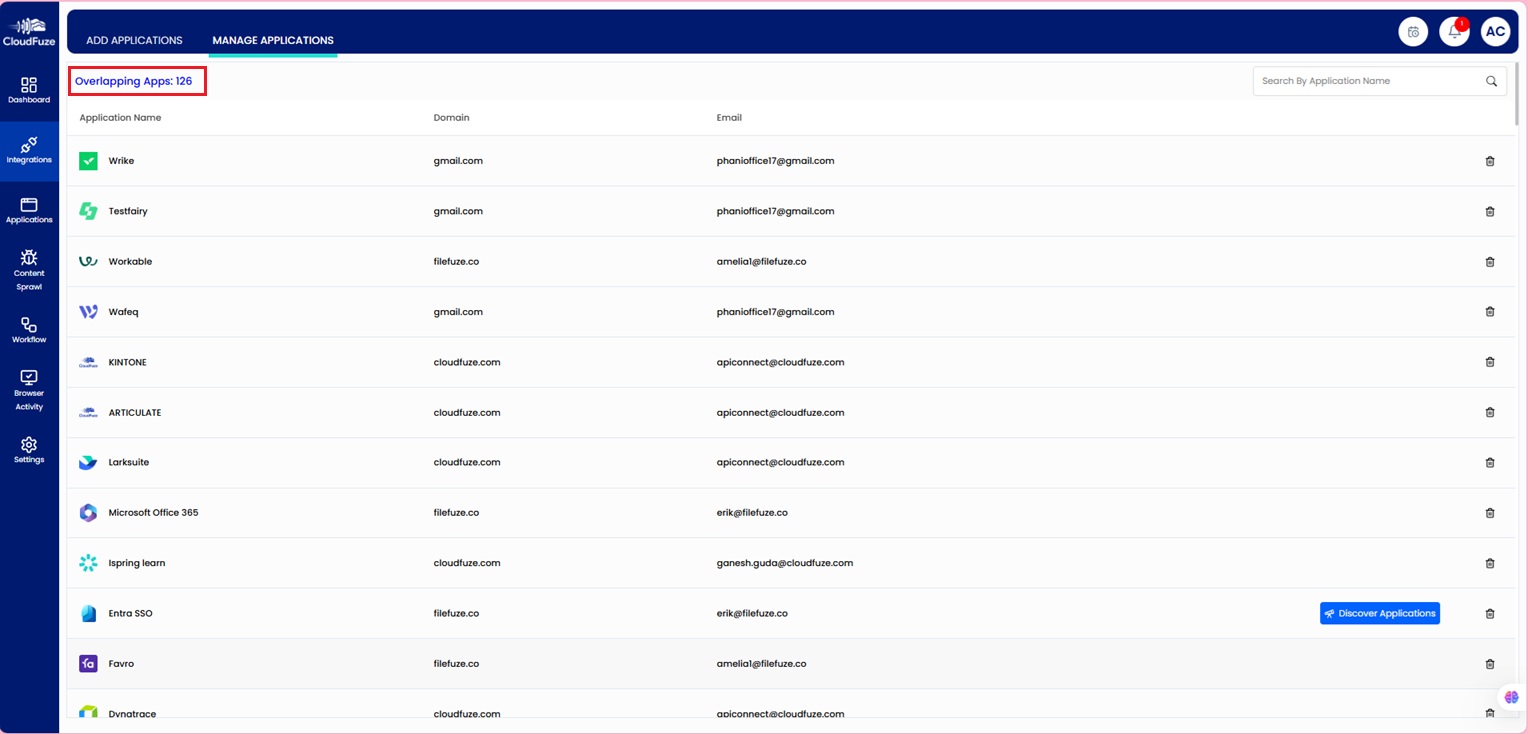
- App Consolidation Report: CIOs/CTOs can easily identify overlapping tools in their tech stack along with an app consolidation report.
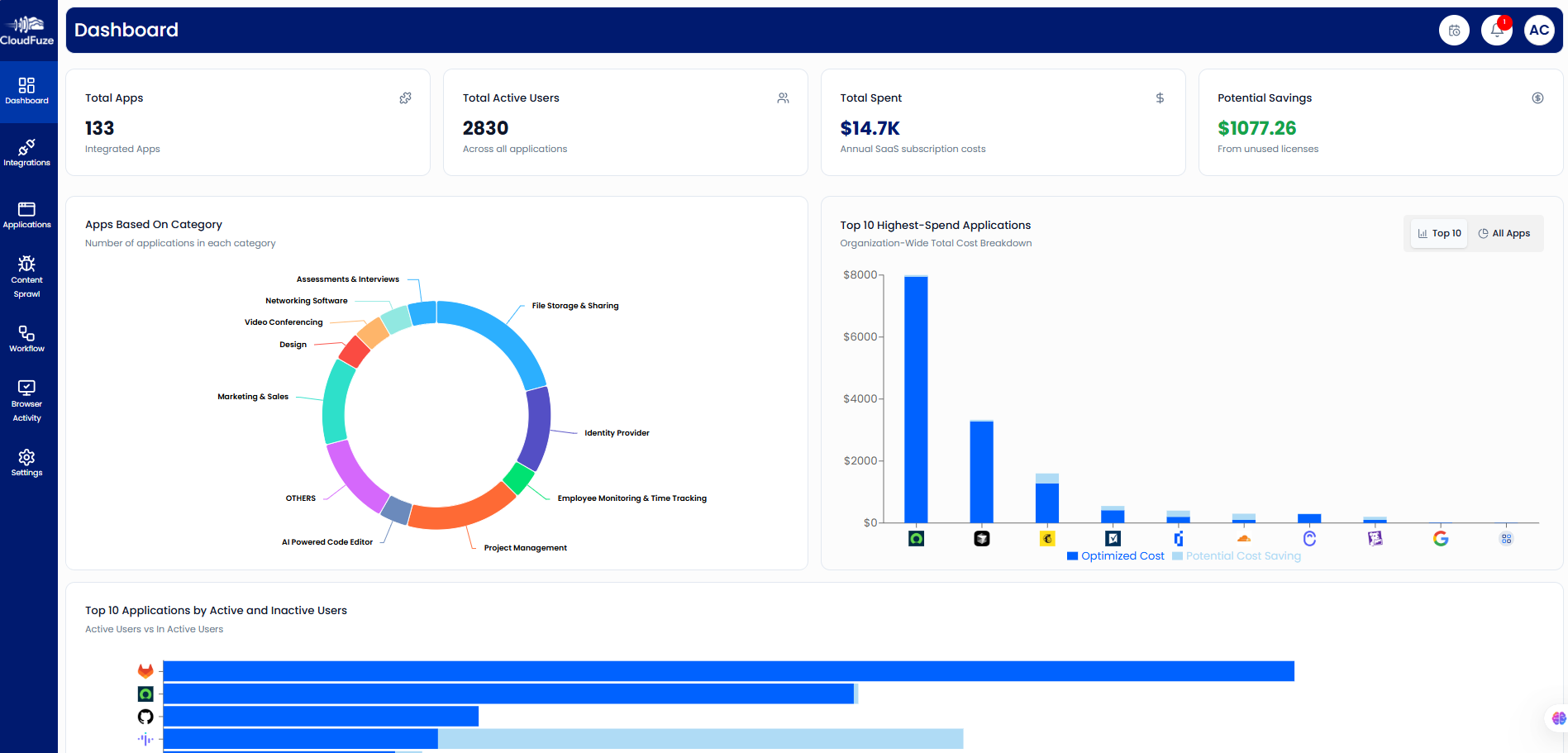
- Potential Savings Recommendation: IT leaders can analyze their employees’ SaaS usage and get automated potential savings insights in one dashboard.
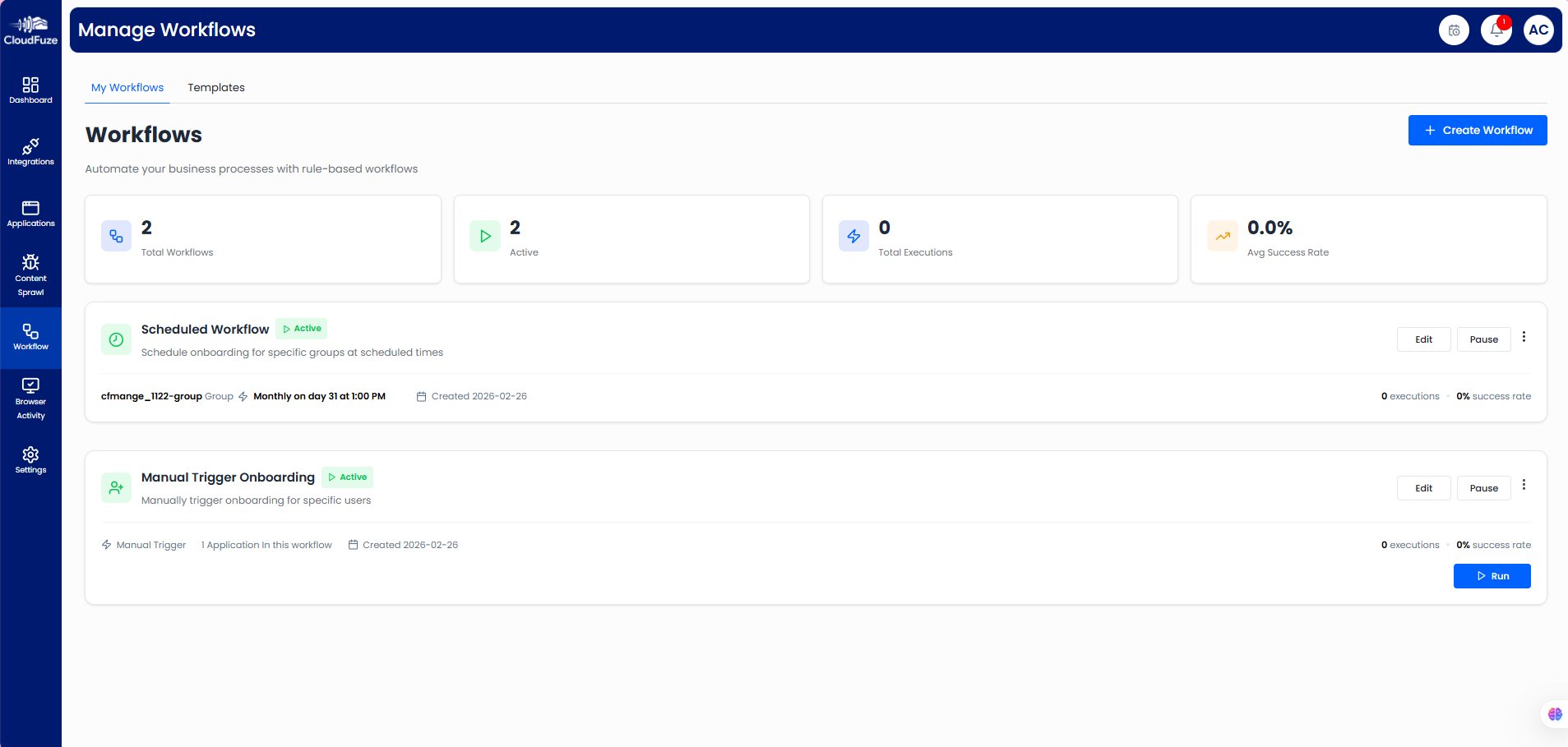
- Zero-Touch User Onboarding & Offboarding: Admins can set up automated IT workflows with role-based access control (RBAC).
- Renewal Notification: Finance teams can track SaaS subscription renewals automatically with timely alerts and email notifications.
How Can Organizations Evaluate the Success of SaaS Stack Consolidation?
Organizations using CloudFuze Manage can evaluate the success of their SaaS stack consolidation by tracking the KPIs in the table below:
| KPI | What It Measures |
|---|---|
| Reduction in the number of SaaS apps | Indicates stack simplification efficiency |
| Cost savings | Lower SaaS subscription and vendor costs |
| IT workload reduction | Fewer tools → fewer IT support burdens |
| Security improvements | Improved security posture and stronger compliance management |
| App adoption & productivity gains | Higher app usage, lower adoption friction |
Stabilize Your SaaS Stack with CloudFuze Manage
Consolidating your SaaS stack is essential for every organization to reduce its IT costs, improve its security posture, and modernize its digital stack.
With our intelligent platform, CloudFuze Manage, SMBs and large enterprises can instantly optimize their tech stack without writing a single line of code.
If you’re ready to consolidate your SaaS stack, contact us for a free demo and start your SaaS consolidation journey with CloudFuze today.
Frequently Asked Questions
1. How to identify redundant cloud applications within an enterprise?
You can identify your redundant cloud apps using our platform, CloudFuze Manage, which automates SaaS discovery, highlights duplicate apps, and provides app consolidation reports to streamline your SaaS ecosystem.
2. What companies offer SaaS stack consolidation reports/insights?
Our company, CloudFuze, offers a SaaS management platform that leads with automated SaaS discovery, app consolidation reports, and cost-savings insights, helping SMBs and enterprises eliminate tool redundancy, optimize SaaS spend, and effortlessly build a cleaner, high-performance SaaS stack.
3. Strategy to prevent SaaS sprawl post-consolidation
Companies can prevent SaaS sprawl after consolidation by implementing work-role-based app access, continuously monitoring Shadow IT, and automating subscription renewals with our tool, CloudFuze Manage.



Leave A Comment