
Enterprise Cloud Migration Playbook: From Analysis to Cutover
When planning an enterprise-level cloud migration, having a tried-and-tested playbook that guides you in every step of the way guarantees success and security. We have created this article as a playbook that you can refer to and plan accordingly.
Key Takeaways:
Purpose and Scope of Migration
One of the first and the most important area to address is the purpose of migrating from the current cloud platform to another cloud platform. Have clarity on your company’s migration use cases, such as consolidation, mergers and acquisitions, etc.
Also, have a proper understanding of your enterprise’s migration goals, such as cost reduction, better governance, better scalability, complete consolidation, etc. By having clarity on these areas, you can align your company’s use case and goals with the overall migration plan.
Migration Partner Selection
After understanding your company’s migration purpose, the next important step is to choose the right cloud migration partner. Choose a migration solutions provider that can address your company’s entire migration needs.
Here’s a quick checklist of the factors you must consider when looking for a cloud migration solution provider:
| Evaluation Criteria | Must-Haves | Does CloudFuze Support It? |
|---|---|---|
| Use case support | Support for diverse use cases like M&As, consolidation, governance, etc. | Yes |
| Migration of large scale | Support for migration of high volumes of data and users. | Yes |
| Performance | Consistent migration performance without downtime. | Yes |
| Security | Enterprise-grade security through OAuth, encryption, dedicated instances, and compliance with GDPR, SOC 2 Type 2, ISO 27001. | Yes |
| Change management support | Support in helping users navigate the change in platforms. | Yes |
| Post-migration support | Support during cutover, post-migration integration. | Yes |
| Managed migration service | End-to-end support at every stage from a dedicated migration manager and team. | Yes |
Scope of Work Creation
As included in all cloud migration playbooks, planning the scope of migration is one of the top needle movers to focus on. To get started, perform an in-depth pre-migration analysis to understand the collaboration structure.
This insight will help you plan all action items, such as:
- The total number of users to migrate
- The total size of files and folders to migrate
- The types of metadata and context to preserve
- The total number of hyperlinks to migrate and correct
- The types of number of migration instances required
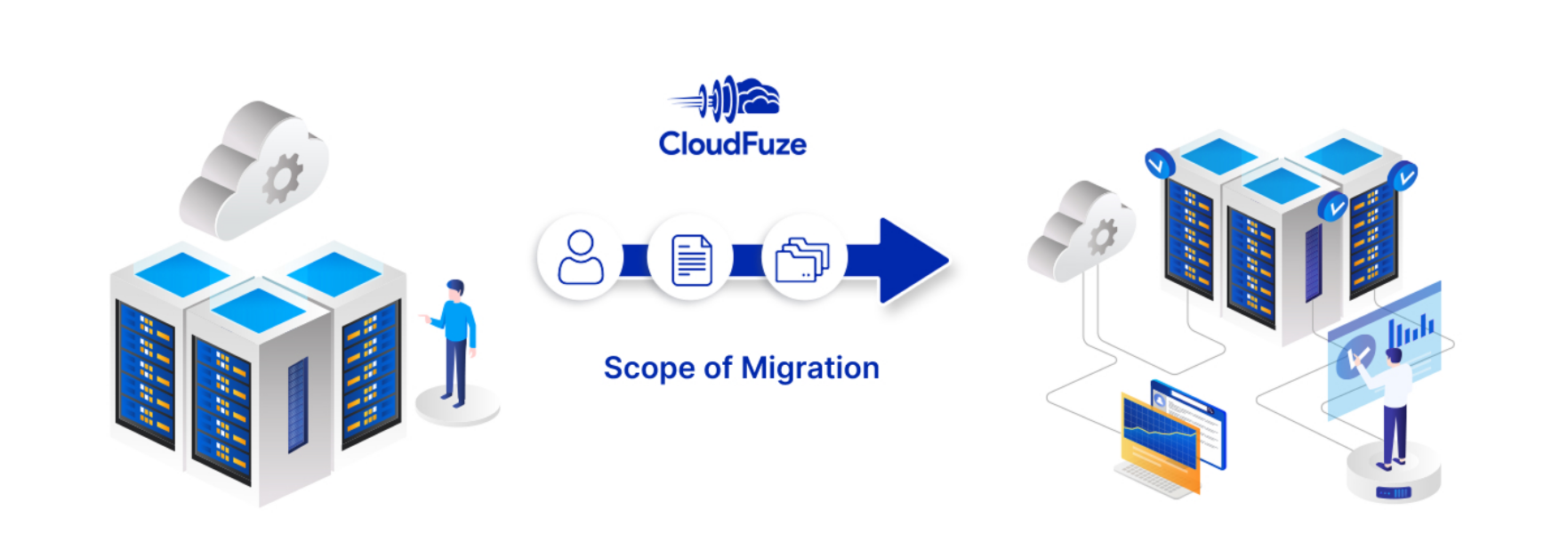
Also, work on SLAs (service level agreements) that protect your company with mutually agreed support for migration monitoring, validation, escalation, and more.
Roadmap and Timeline
It goes without saying that creating a well-informed roadmap and timeline is one of the best practices in enterprise cloud migration. Coordinate with your migration vendor and list out all the stages and milestones of the migration journey.
Based on this information, plan a proper migration roadmap and timeline that sets realistic expectations. This way, you get a clear picture of the journey ahead and know what to expect as key deliverables from the migration provider.
User Mapping and Batch Creation
How well you map the source and destination cloud users largely determines the accuracy of the migration. Although many migration playbook templates list user mapping as priority, they do not exactly share the mapping methods.

From our 12+ years of migration experience, we recommend CSV-based user mapping as it is a tried-and-tested mapping method. Our migration team provides assistance in using correct syntax to create accurate CSV mappings.
Learn more about mapping in our user mapping white paper.
After mapping, create user batches by dividing the total number of users to migrate into several equal batches. This approach helps keep the migration process lightweight, simplifies validation, and eliminates API throttling and downtime risks.

Migration Monitoring and Validation
After starting the migration process, make sure to monitor the progress regularly. Our cloud migration tool, CloudFuze Migrate, offers a dedicated reports dashboard that displays migration progress in real time with statuses like In-Queue, In-Progress, Processing, and Completed.
After the migration gets completed for every user batch, make sure to validate it using the tool-generated migration reports. Make sure that the files, folders, metadata, and hyperlinks have been migrated as agreed in the project documentation.
Perform Secure and Successful Enterprise Cloud Migration
Leverage our industry-leading cloud migration tool to perform your enterprise’s cloud migration. With our proven methodologies, you can navigate the biggest challenges and ensure a successful cloud migration.
Share your migration requirements with us for a tailored quote.
Learn more about our one-stop cloud migration solution in this video:
Frequently Asked Questions
1. How to create a cloud migration plan from analysis to cutover?
Include all key phases of the migration in the plan, such as pre-migration analysis, scope of work creation, user mapping, user batch creation, pilot migration, one-time migration and validation, delta migration and validation, cutover, and post-migration integration.
2. What is the best cloud migration playbook for enterprise businesses?
You can refer to this guide which we have designed as a playbook to plan your enterprise’s cloud migration project. It outlines all the essentials that help ensure a secure and successful cloud migration.
3. What are the key phases outlined in a typical cloud migration playbook?
Pre-migration phase, migration phase, and post-migration phase are some of the key phases outlines in a typical cloud migration playbook.



Leave A Comment