
Is Your Enterprise Agent Governance Policy Enforced or Just Documented?
Your enterprise agent governance policy is enforced only when its documented policy or rules run continuously against every AI agent, automatically trigger risk alerts or actions, and produce audit evidence with minimal manual intervention.
In practice, your enterprise teams keep building AI agents and connecting them to third-party CRMs and HR systems, but nobody checks them against your company’s written AI governance policy until the next audit.
In this blog post, you’ll discover how to enforce agent governance policy at enterprise scale.
Key Takeaways
What Separates an Enforced Agent Governance Policy from a Documented One
An agent governance policy documentation sets intent to reduce AI-related security risks, while enforcement turns that written policy into action.
However, a documented agent governance policy covers only the agents your IT teams approved, while an enforced policy automatically discovers every agent, including shadow AI agents, in your enterprise environment.
Under a documented policy, new agents surface at the next quarterly review, and security violations become manual IT tickets, if anyone notices them at all. An enforced policy flags new agents as soon as they appear, responds to security violations with automatic alerts or immediate access restrictions, and keeps continuous user and agent activity logs, so IT and security teams need not have to gather audit evidence manually.
On the other hand, many enterprises today are struggling with how to create an agent governance policy that is practical, enforceable, and capable of scaling.
Why Documented Agent Governance Policies Break Down as AI Agents Scale
In many enterprises, policy-only AI agent governance fails at scale because they follow manual, spreadsheet-based governance processes that can’t keep up with their agent adoption. Additionally, their quarterly agent governance review oversees only the agents that exist on review day, not those built and abandoned in between.
In fact, IBM’s 2025 Cost of a Data Breach Report found that 97% of organizations reporting AI-related breaches lacked proper AI access controls. This clearly highlights that a documented agent governance policy that nobody checks offers a false sense of security enterprise-wide.
Many IT teams and security teams believe that ungoverned AI agents can create compliance-related or security-related risks. But they impact your AI agent performance too.
Automated agent governance policy enforcement slows agents down only when rules go live untested and block legitimate work. By validating each and every agent governance control before enforcement, enterprises can reduce severe security risks and encourage AI-powered innovations simultaneously.
For example, your sales ops team deploys a pilot AI agent with access to Salesforce and your company’s finance data. The pilot project ends, the owner leaves, but the agent keeps its access. While the enterprise-wide written policy required active ownership and least-privilege agentic AI access, nothing enforced it. However, if enterprises enforce automated orphaned-agent rules, it would detect and revoke orphaned agent access immediately.
5 Signs an Enterprise Agent Governance Policy Exists Only on Paper
The table below shows 5 signs that prove that your agent governance policy exists only on paper and controls needed to map to an automated policy enforcement.
| Sign | Enforced Rule That Closes It | Severity |
|---|---|---|
| Your IT teams cannot list over-permissioned agents on demand | Broad Data Permissions Review | High |
| High-risk agents run until someone notices | High-Risk Auto Suspension | Critical |
| Agents reach sensitive business systems without alerts | Sensitive System/Data Connector Alert | High |
| Agents keep running after their owner exits | Orphan Agent Escalation | High |
| Unused agents keep live credentials | Stale Agent Detection | Medium |
How CloudFuze Manage Helps Enterprises Move from Documented to Enforced Agent Governance
Every AI agent governance policy enforcement starts with AI application discovery and ends with audit evidence. CloudFuze Manage helps enterprises turn every written responsible AI governance rule into a live, testable policy.
It is a unified SaaS and AI app management platform that helps enterprises gain complete IT visibility, control licensing costs, manage end-to-end user lifecycle workflows, and stay audit-ready without adding operational complexity.
Let’s see how CloudFuze Manage helps enterprises enforce automated agent governance policy at scale.
-
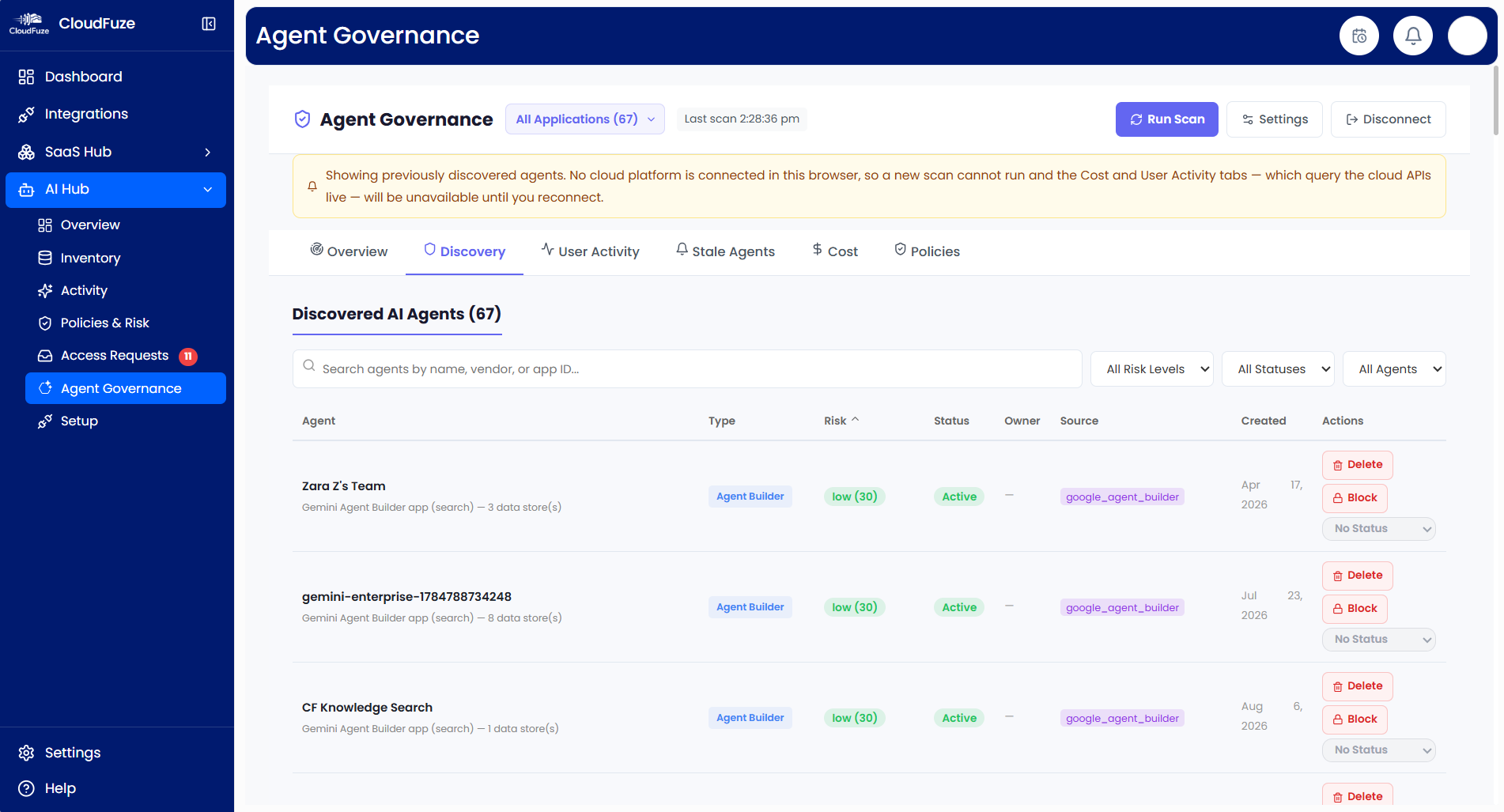
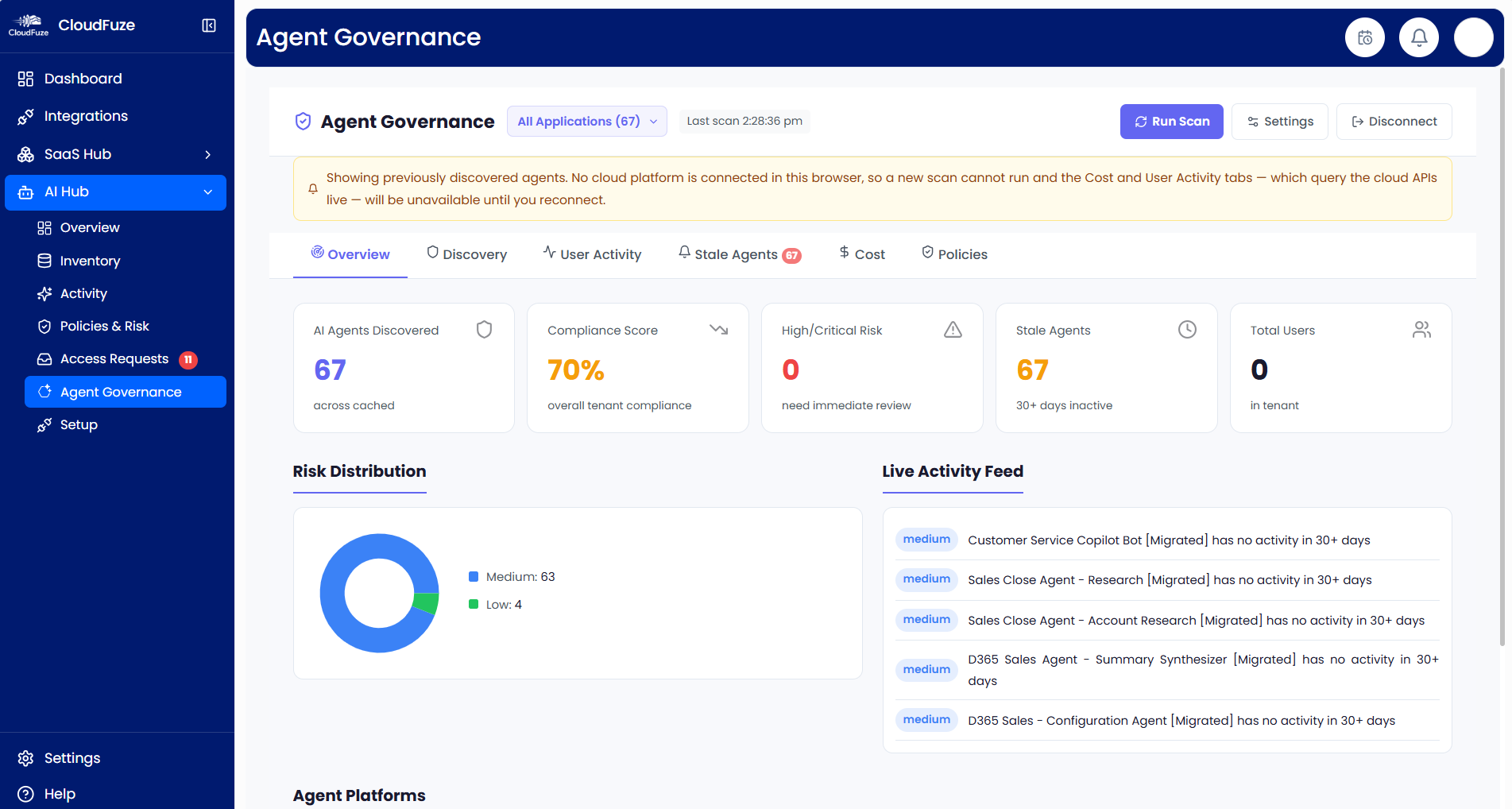
AI Agent Governance Discovery
See every agent your teams built across Microsoft 365, Copilot Studio, Gemini Enterprise, OpenAI, and Anthropic, with its designated human owner and data security risk level.

-
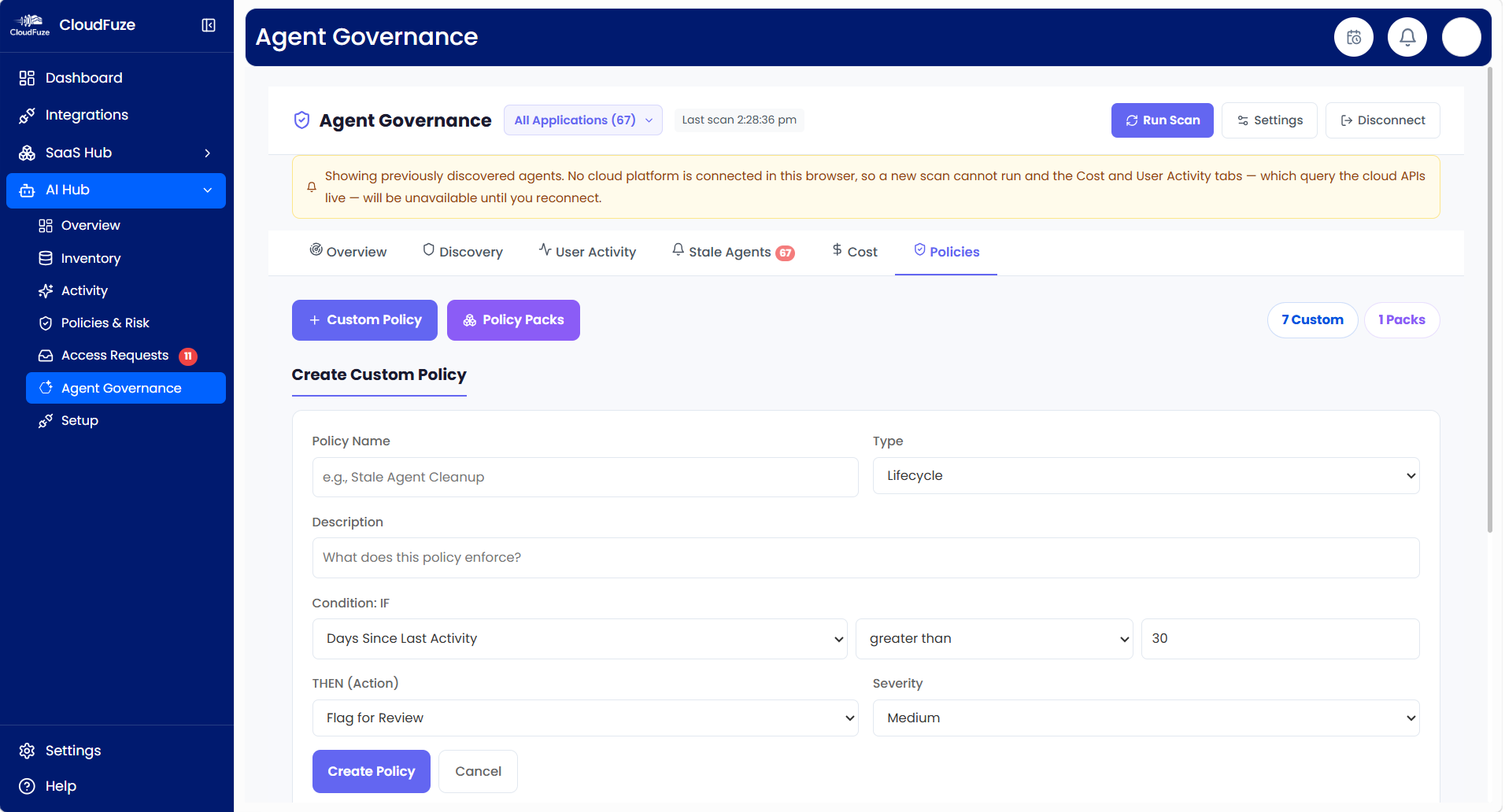
Customized Agent Governance Policies
Turn each written agent governance rule into a live control tagged critical, high, or medium across your entire AI agent lifecycle, including policies under risk, connector, orphan, and stale categories.

-
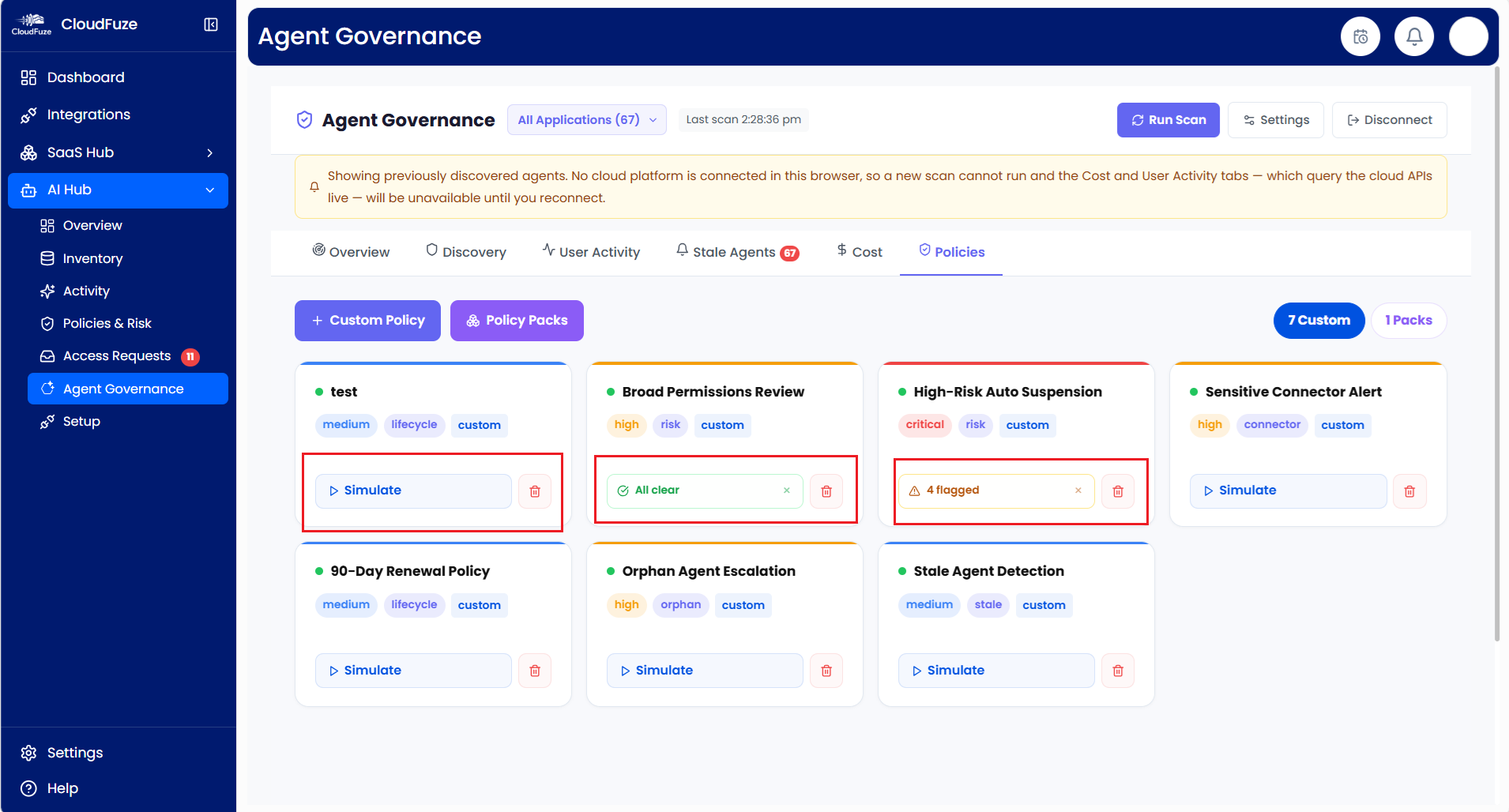
Simulate Policy Enforcement Before Deployment
Test each customized/ready-made policy’s impact on your enterprise-wide AI agents before enforcement, then deploy evaluated and approved controls with a single click.

-
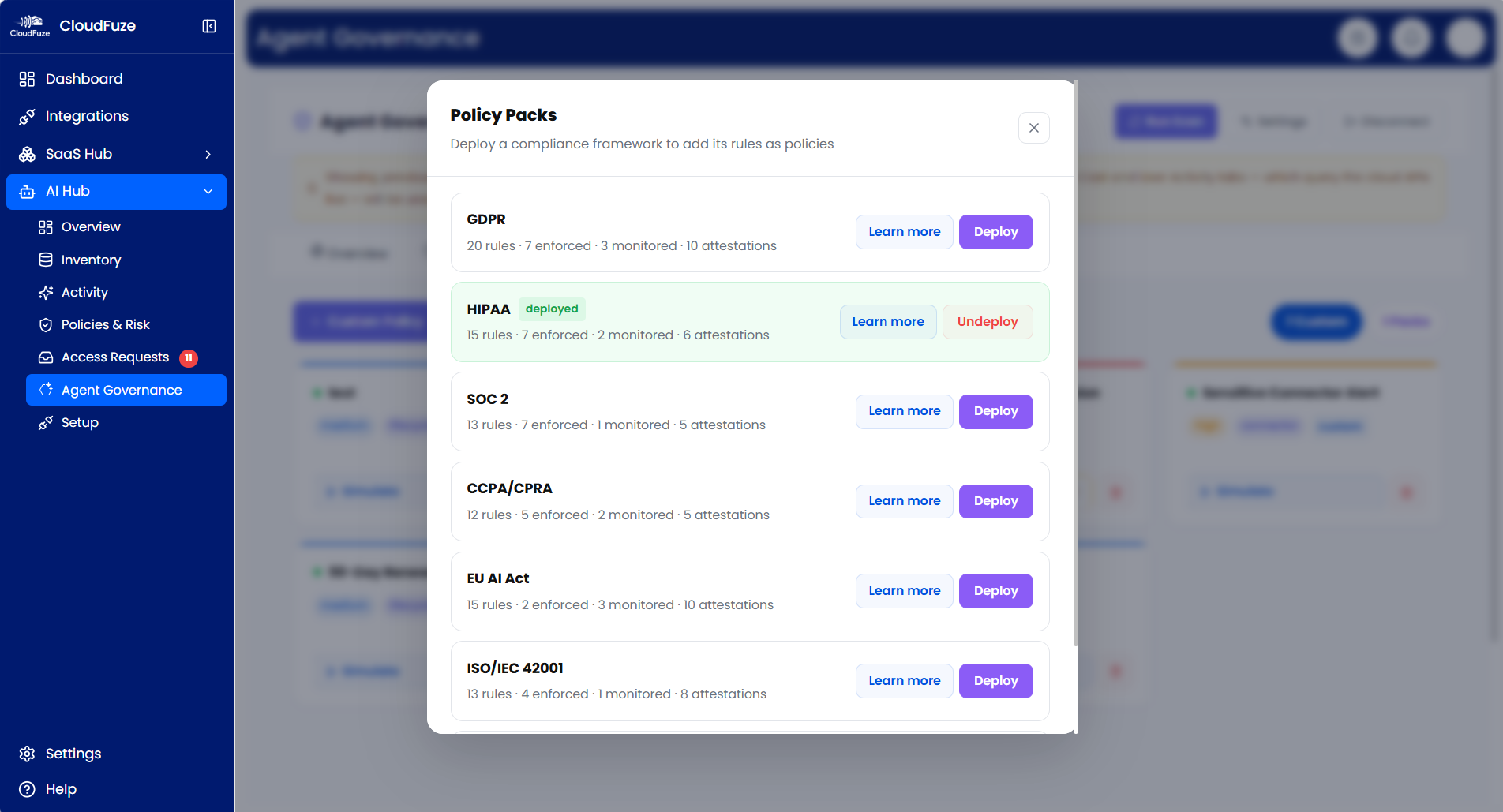
Policy Packs
Instantly map GDPR, HIPAA, SOC 2 Type 2, CCPA/CPRA, EU AI Act, and ISO/IEC 42001 requirements to enforced rules, monitored rules, and attestations instead of manually building them.

-
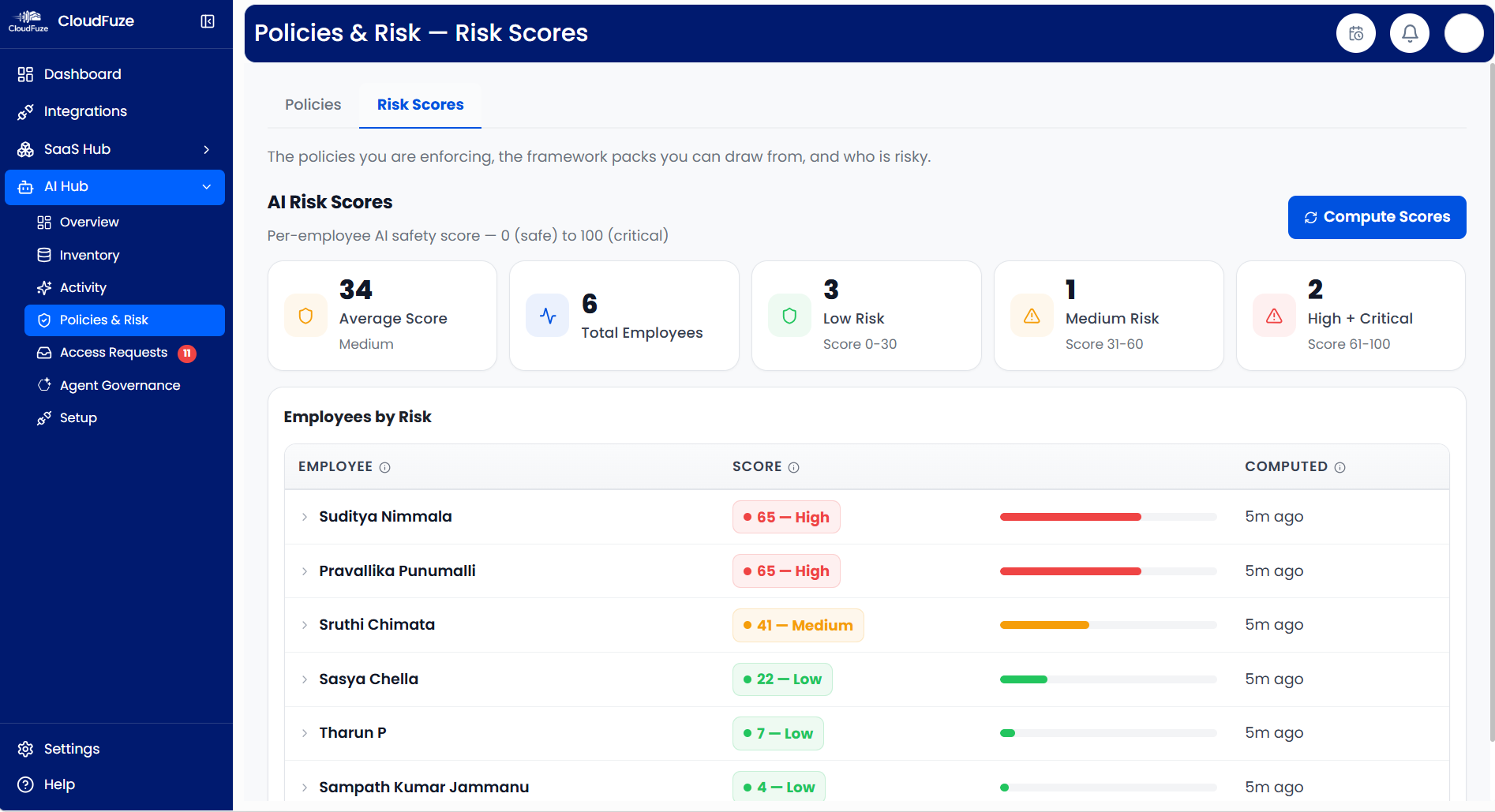
Per-Employee AI Risk Scores
See which employees carry the highest AI risk score (between 0-100) grouped into low, medium, and high-plus-critical bands, so your IT admins know exactly where security risks lie.

-
Agent Lifecycle and Evidence
Stop orphaned and stale agents from holding standing access to your business systems as well as data through escalation, stale agent detection policy, and ownership recertification, with AI compliance scores and agent activity export ready for auditors.

Implement Agent Governance at Enterprise Scale with CloudFuze Manage
An agent governance policy earns its real value only when it runs actively on your enterprise environment. If your AI governance rules cannot detect and revoke an orphaned agent the day it appears, your agents are governed on paper only.
However, an AI agent governance software like CloudFuze Manage helps enterprises turn documented AI governance policy into automated, enforceable data governance controls.
Frequently Asked Questions
1. What is an AI agent governance policy?
An AI agent governance policy defines who can create, approve, access, monitor, and retire your enterprise’s AI agents. It establishes clear human ownership, agent accountability, data-access rules, agent oversight requirements, and AI response procedures to keep agent activities aligned with your business and compliance requirements.
2. What is the difference between an enforced and a documented agent governance policy?
A documented agent governance policy states the rules AI agents should follow, usually in a document that is reviewed periodically. An enforced policy turns those rules into live controls that check every agent continuously and act automatically when a policy/rule is broken.
3. How often should enterprises review AI agent permissions?
Enterprises get the strongest coverage by checking AI agent permissions continuously through automated agent governance rules, then pairing that with scheduled owner recertification.
4. What happens to AI agents when their owner leaves the organization?
AI agents keep running after their owner leaves the company, with the same permissions and connectors, and no one accountable for what they do, without automated policy controls in place. However, with an orphan agent escalation rule in place, idle agents are flagged as soon as ownership lapses, then reassigned to a new owner or suspended based on their risk level.
5. Which compliance frameworks apply to enterprise AI agents?
The applicable frameworks depend on the data agents handle and where an enterprise operates. GDPR and CCPA/CPRA cover personal data, HIPAA covers protected health information, and SOC 2 Type 2 covers the security controls customers expect. The EU AI Act sets obligations for AI systems used in the European region, while ISO/IEC 42001 is a voluntary, certifiable standard for AI management systems. CloudFuze Manage provides ready-made policy packs to deploy the above compliance guardrails in one click.
6. How does enforced governance mitigate unauthorized AI agent actions?
Enforced agent governance policies turn each policy rule into a condition that is checked automatically. When an agent gains broad data access permissions, connects to your confidential enterprise system, or loses its owner, the matching rule fires and triggers an alert, escalation, or suspension before the agent can move data or act outside its approved scope.
About the Author: Rashmi Ramesh


