
Why SaaS Security Demands a Proactive Approach in 2026
SaaS and artificial intelligence have transformed how you and your team operate in 2026. However, they have a greater risk of cloud security breaches and threats if not managed efficiently. Therefore, protecting your SaaS and AI apps is essential for enterprises.
At CloudFuze, we offer reliable SaaS & AI app management software, CloudFuze Manage, that safeguards your organization’s data without disrupting your business.
This blog post will help you understand SaaS & AI app security, common risks, why a proactive security strategy is necessary, and how CloudFuze Manage eliminates these risks.
Key Takeaways:

What is SaaS & AI App Security Actually?
SaaS & AI app security refers to the measures you take to protect cloud-based apps and the data they handle remotely from any security threats and unauthorized user access.
While it may seem simple, it presents security challenges, such as data leakage, industrial regulatory concerns, and limited control over the hosting infrastructure. The main components of SaaS & AI application security are presented in the image below.

Common Risks and Threats in SaaS Security
The most common SaaS & AI app security risks and threats are represented in the table:
| Risk Area | What Happens | Impact |
|---|---|---|
| Privacy Concerns | Hackers steal sensitive data from cloud services. | Exposure of personal info, financial records, and trade secrets. |
| Data Leaks | System failures, accidental deletions, or attacks. | Workflow disruption, loss of trust. |
| Non-Secured APIs | Poorly designed APIs expose systems. | Illegal access, data theft, service disruption. |
| Illegitimate Access | Weak passwords or software flaws exploited. | Unauthorized system access. |
| Insider Threats | Employees misuse access intentionally or accidentally. | Leakage of critical business data. |
| No Proper Encryption | Data transmitted without strong encryption. | Hackers exploit sensitive information. |
| Regulations Violations | Ignoring standards like GDPR, SOC 2. | Fines, lawsuits, and brand damage. |
Why Is Being Proactive Essential in SaaS Security?
SaaS & AI security risks are evolving, so reacting late can lead to severe consequences. You’ll face the following problems when SaaS & AI security is not adequately prioritized:
Increasing Cyber Threats
- Attackers constantly evolve their tactics to exploit your software and AI tools.
Reputation Damage & Legal Consequences
- A system intrusion can damage your brand’s reputation, erode customer trust, and lead to negative media coverage.
- Due to this, you may face legal consequences like huge fines, penalties, and lawsuits.
Financial Loss
- Information loss can result in data recovery costs, legal fees, regulatory fines, and increased customer notification expenses.
Customer Trust Issues
- Customers expect their data to be protected, and they’ll continue their business with brands where their information is secure.
A proactive approach to the above concerns helps ensure smooth SaaS & AI operations and quick responses to SaaS and AI data security risks.
5 SaaS Security Best Practices
These are the 5 best practices you can follow to safeguard your SaaS environment:
- You can conduct regular security audits to identify risks in your systems and apps. Additionally, apply the principle of least privilege to grant only necessary access and review permissions regularly.
- Add an extra layer of protection by requiring multi-factor authentication (MFA) for your users. Also, use Single Sign-On (SSO) to let users access all authorized apps with one secure login.
- You must ensure that all data, whether at rest or in transit, is encoded to protect it from unwanted access.
- You can implement Identity and Access Management (IAM) to define roles and control access with centralized IAM policies.
- Educate your team on the latest security practices and probable threats to avoid human error. And regularly assess your SaaS & AI service provider to ensure they meet security standards.
Secure Your Tech Stack with CloudFuze SaaS & AI App Management Platform
CloudFuze Manage strengthens your organization’s SaaS & AI app security by providing total visibility and insights across all your applications. Here’s how we ease your SaaS & AI stack management:
- Connect all your SaaS & AI apps to our platform with a single click to gain a full view of your entire digital system, including Shadow AI/IT. .
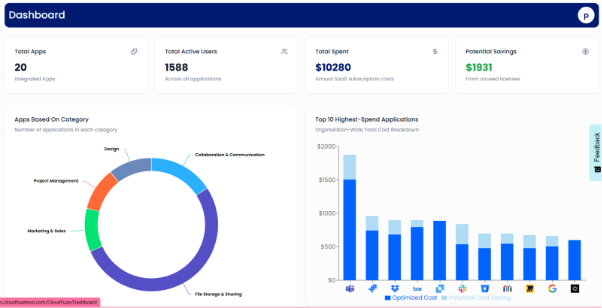
- Reduce hidden subscription costs by 30% and minimize security risks through our centralized license management.
- Streamline user lifecycle management and automate the onboarding & offboarding processes, which eliminates your exposure to security threats.
- Get timely renewal alerts and access detailed reports on usage, spending, and activity to make insightful decisions.

Leverage CloudFuze Manage for Your SaaS & AI App Security
By understanding SaaS & AI app security, recognizing all possible risks, and taking preventive measures, you can safeguard your business, avoid costly fines, and maintain your customers’ trust.
We at CloudFuze provide a leading SaaS & AI management app that ensures your cloud applications remain secure and resilient.
Frequently Asked Questions
1. Does CloudFuze Manage support data residency and privacy requirements?
Absolutely. CloudFuze Manage is designed with data privacy and residency in mind, offering customizable settings to align with your organization’s legal and regulatory obligations across different regions.
For example, GDPR is region-specific, and we, at CloudFuze, customise it for your organization.
2. Can CloudFuze Manage reduce our SaaS & AI app spending?
Yes. By centralizing SaaS and AI app license management, our tool helps you identify underused/duplicate tools, optimize app usage, and cut hidden subscription costs, typically saving organizations 20–30% on their SaaS & AI app expenses.
3. Who is responsible for SaaS & AI app security: the provider or the customer?
SaaS & AI app security follows a shared responsibility model. The provider is typically responsible for securing the underlying infrastructure, application, and platform.
At the same time, the customer is responsible for managing user access, configuring settings, and protecting their data within their application.



Leave A Comment