
A 5-Step Framework to Manage Shadow IT in Your Organization
Large organizations can manage shadow IT by discovering unauthorized IT applications, assessing shadow IT risk levels, establishing shadow IT governance policies, applying zero trust controls, and monitoring employees’ software usage continuously.
This 5-step framework helps IT teams improve org-wide application stack visibility, reduce data security risks, and strengthen user management and access governance.
This blog post explains the 5-step shadow IT management framework in detail.
Key Takeaways:
Why Is It Important for Organizations to Manage Shadow IT?
When employees adopt software tools outside established IT processes, it creates shadow IT.
The ease of subscribing to cloud applications with a credit card and 5 minutes of time has made it possible for employees and departments to introduce new SaaS tools without involving IT.
In many organizations, various departments now purchase and deploy software applications without going through formal IT approval processes. While this improves your team’s agility, it can also create IT visibility gaps that make your IT governance more difficult.
Meanwhile, worldwide spending on enterprise software is projected to reach $1.44 trillion in 2026, according to a Gartner study. This statistic highlights organizations’ growing reliance on SaaS applications worldwide.
The rise of cloud-first software adoption and remote work, along with slow IT approval processes, has made Shadow IT a growing challenge for organizations. Today, shadow IT isn’t limited to software apps. Employees increasingly use AI platforms without proper IT approval to make their work easier. This, in turn, increases org-wide security risks, application sprawl, compliance concerns, and IT spending.
Therefore, effective shadow IT risk management is important for every IT team.
Warning Signs That Indicate Your Organization Has a Shadow IT Problem
If your organization experiences several of the warning signs discussed in the table below, it may be time to strengthen your org-wide shadow IT management strategy and improve visibility into software application usage.
| Warning Sign | Risk |
|---|---|
| Employees use personal apps for work | Business data moves outside IT visibility |
| Duplicate SaaS tools | SaaS sprawl and increased IT spend |
| Rising SaaS spend | Unapproved software purchases |
| Unknown apps in audits | Lack of IT governance |
| Inactive users with overprivileged access | Compliance and security exposure |
| Department-led software purchases | Procurement and IT controls are bypassed |
A Clear 5-Step Framework to Manage Shadow IT in Your Organization
Follow these 5 steps to identify unapproved IT applications, evaluate shadow IT risks, and improve SaaS governance within your organization.
Step 1: Discover Shadow IT Applications
The first step in Shadow IT management is understanding which applications employees use outside approved IT processes.
You can identify Shadow IT applications through:
- SSO logs from platforms like Microsoft Entra ID and Okta
- Monitoring browser activity of employees
- IT expense and procurement records
- CASB and network traffic data
- Endpoint inventories
This helps your IT teams build a complete inventory of IT-approved and unapproved applications and prioritize Shadow IT risk management efforts.
Step 2: Assess Every Shadow IT Risk
Not all Shadow IT applications pose the same level of security risk.
Evaluate each unapproved software application based on:
- Data sensitivity
- User access and permissions
- Vendor security posture (ISO 27001, GDPR, and SOC 2 Type 2)
- Compliance requirements
- Business impact
Applications that primarily handle customer, employee, or financial information should receive immediate IT attention.
A well-defined shadow IT risk assessment process helps IT teams prioritize remediation efforts and focus on the SaaS applications that pose the greatest data security concern.
Step 3: Establish Applicable Shadow IT Governance Policies
Many employees adopt shadow IT tools because IT-approved alternatives are unclear or difficult to access.
A strong shadow IT governance framework should define:
- Approved list of software applications
- SaaS procurement guidelines
- Application usage policies
- Data-sharing requirements
- Vendor evaluation criteria
- Clear software application approval workflows
When developing shadow IT governance policies, organizations must aim to give employees access to the tools they need without creating compliance gaps.
Strong governance policy implementation also plays a major role in org-wide Shadow IT mitigation.
Step 4: Zero Trust Architecture Implementation
Zero Trust Architecture makes sure that only authorized employees can access the business applications and data they need for their work.
In order to achieve zero trust, every large organization should:
- Apply multi-factor authentication and single sign-on for every app.
- Apply least-privilege or role-based user access controls.
- Continuously validate and review user access.
Rather than assuming a user or application is trustworthy, zero trust controls require IT admins to verify user identity before granting any application access. This reduces the impact of shadow IT applications and improves overall security.
Step 5: Continuously Optimize Shadow IT Management Process
Shadow IT rarely disappears from your organization after a single strenuous cleanup effort. However, new shadow IT applications can enter your organizational IT environment at any time.
Therefore, organizations should routinely:
- Identify newly adopted SaaS applications within teams.
- Monitor software usage trends, review application utilization, and optimize SaaS spending based on actual usage.
- Detect compliance violations and remove redundant software apps.
Regular application monitoring helps maintain IT teams’ visibility and prevents Shadow IT from becoming a recurring security problem.
How CloudFuze Manage Helps Organizations Control and Manage Shadow IT
As organizations add more software vendors, tracking application usage through shared spreadsheets and manual IT audits and reviews becomes increasingly difficult.
However, our SaaS and AI app management platform, CloudFuze Manage, provides a centralized view of SaaS applications, users, licenses, and spending. It also enables IT teams to quickly identify software that falls outside approved processes.
It supports 190+ SaaS and AI apps such as Salesforce, HubSpot, Microsoft 365, Mailchimp, Cursor, Claude, Gemini, and many more.
Now let’s see how CloudFuze Manage helps organizations with shadow IT governance:
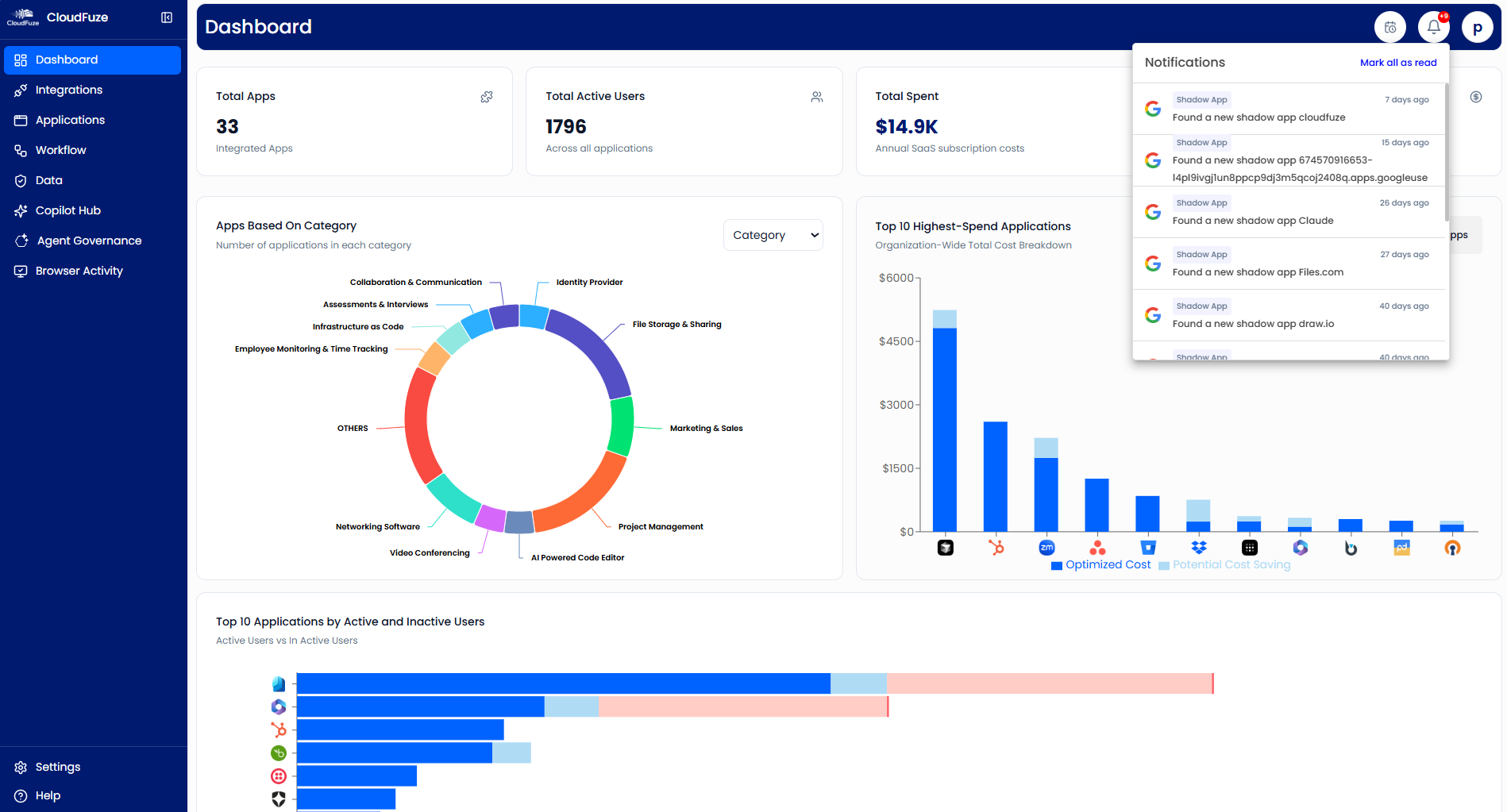
- Detect Shadow IT Early: Get notified when unapproved SaaS applications enter your IT environment.

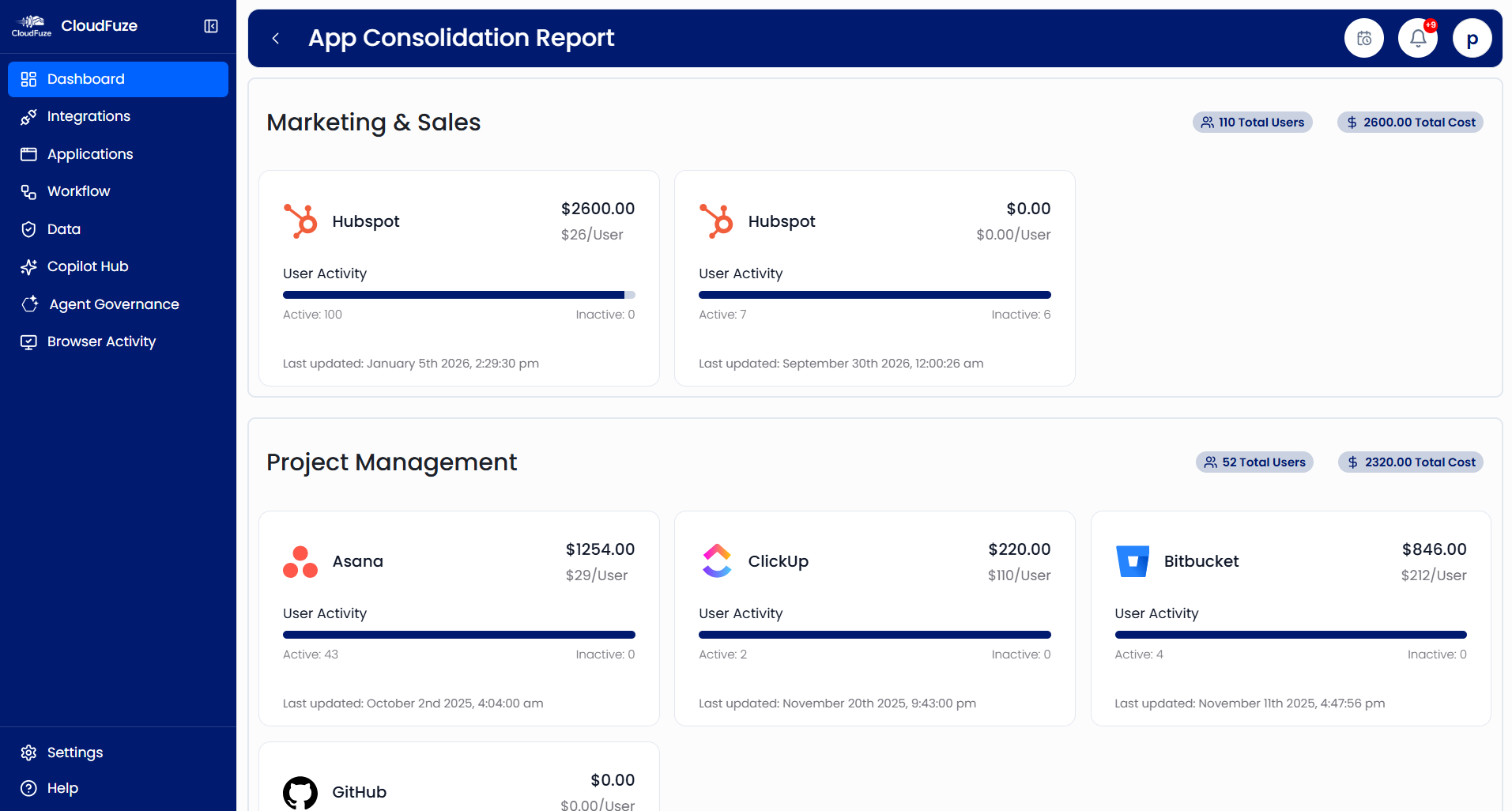
- Reduce SaaS Sprawl: Find and eliminate duplicate applications and consolidate overlapping tools with our app consolidation report.

- Increase SaaS Visibility: Gain a unified view of your SaaS applications, licenses, users, and spend.

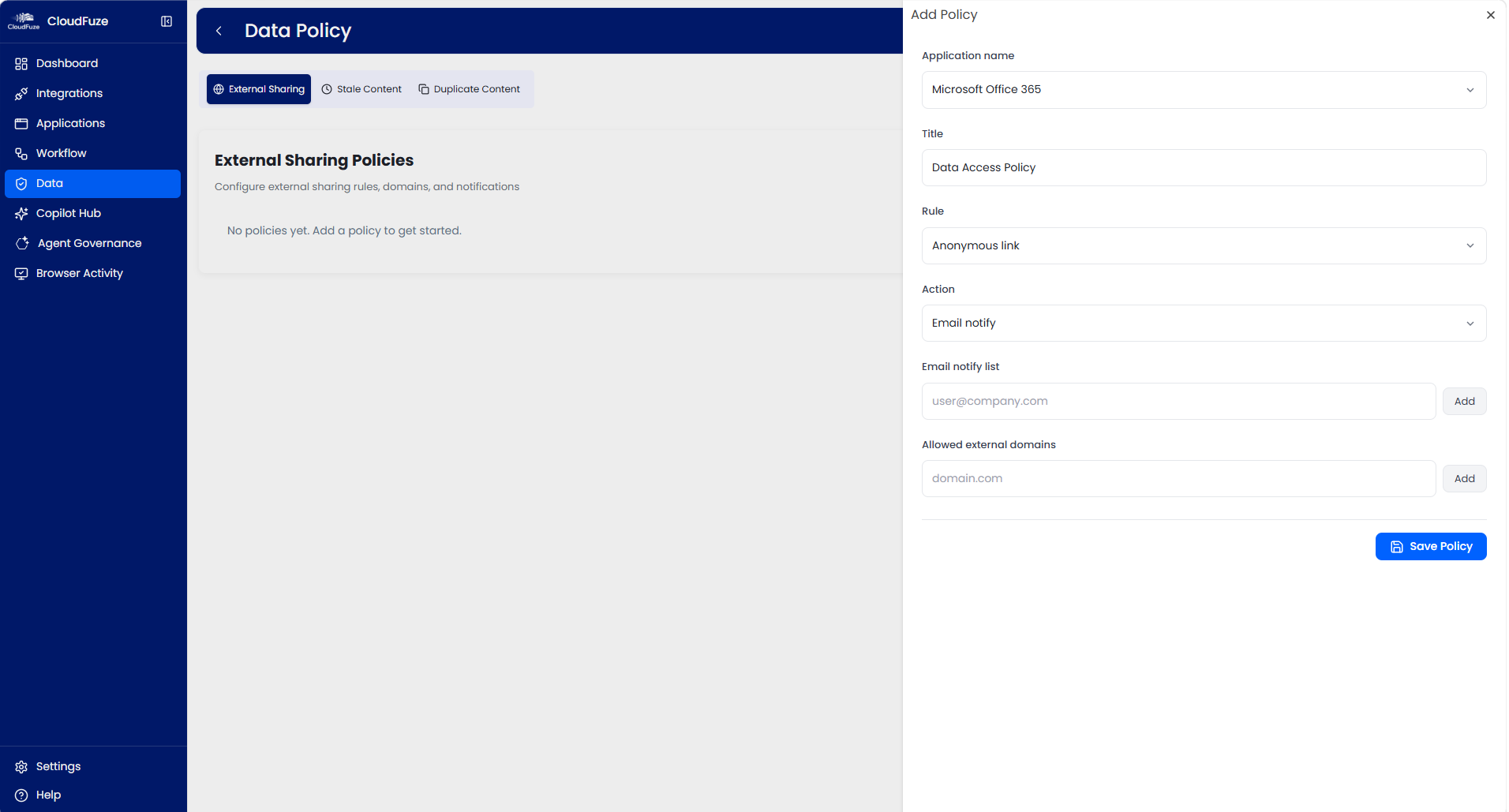
- Strengthen Access Governance: Apply data governance policies, RBAC, and least-privilege access at enterprise scale.

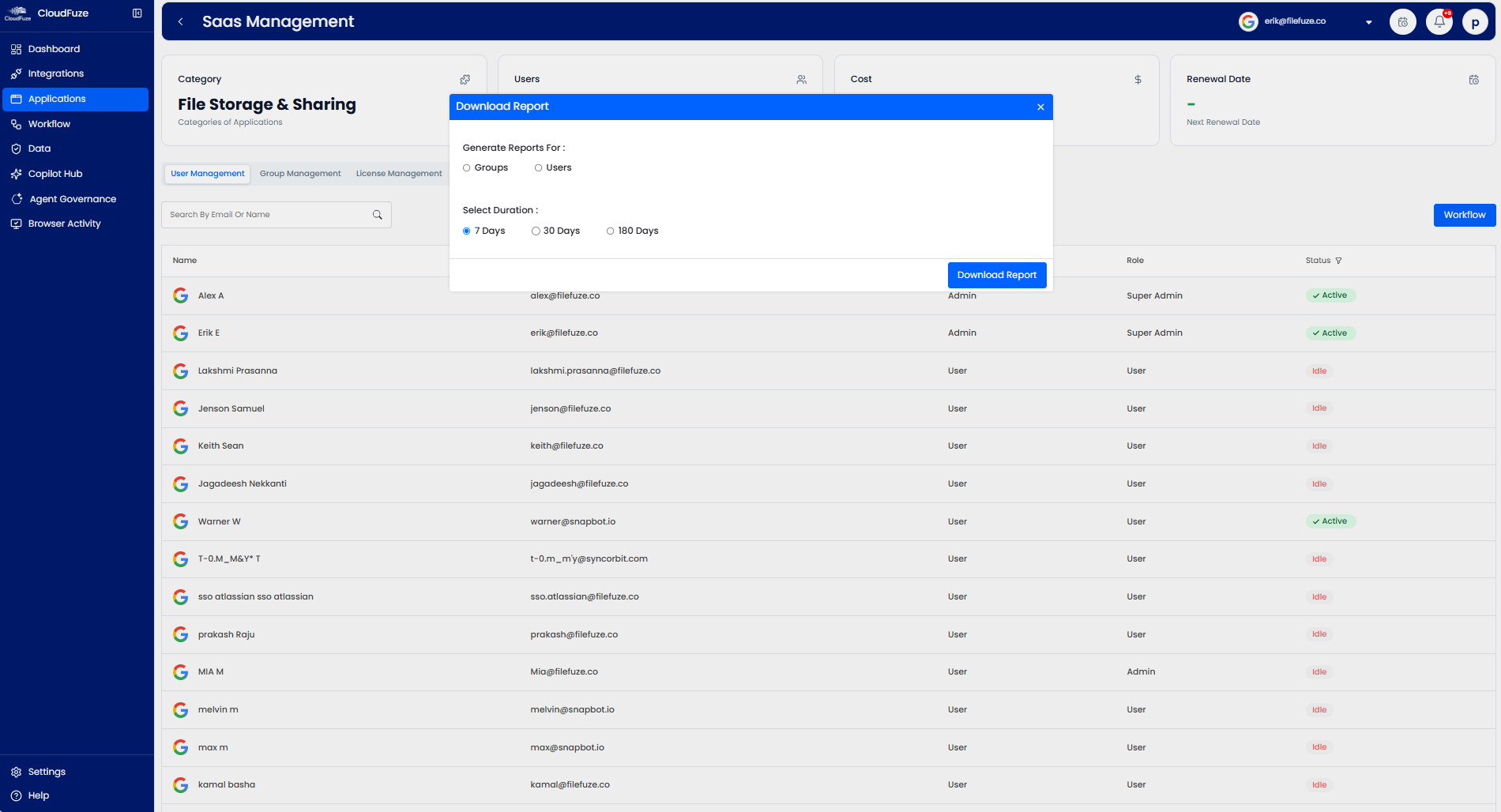
- Simplify Audits and Compliance: Maintain exportable user activity logs for compliance reporting and audit readiness.


Also Read: A Web3 Company Cuts Shadow IT by 40% with CloudFuze Manage
Confidently Manage Shadow IT in Your Organization with CloudFuze Manage
Organizations that follow the 5-step shadow IT management framework are better positioned to reduce and manage shadow IT risks.
CloudFuze Manage offers the visibility and governance controls needed to eliminate shadow IT on a single platform with a flexible per-user pricing plan.
Frequently Asked Questions
1. How do I detect unsanctioned software in a corporate network?
Large corporations can identify unapproved software using their SSO logs, browser activity monitoring, CASB solutions, Wi-Fi network traffic analysis, expense audits, and endpoint inventories.
2. What are the best software tools for Shadow IT management?
CloudFuze Manage is one of the best shadow IT solutions that provides full-stack application discovery, application usage monitoring, data governance controls, compliance reporting, and SaaS cost-optimization capabilities.
3. How do I implement shadow IT governance policies?
You can implement shadow IT governance policies by establishing IT-approved software standards, enforcing standard application procurement workflows, and review processes. It should also include employee education programs.
4. What are the compliance implications of departments using Shadow IT tools?
Shadow IT applications can create data privacy risks, weaken your audit trails, introduce data residency concerns, and increase the likelihood of regulatory violations.
5. Can I integrate Shadow IT detection with existing enterprise security systems?
Yes. Organizations can connect shadow IT monitoring solutions like CloudFuze Manage with Entra ID, Okta, and other enterprise security systems.
6. What is the difference between Shadow IT and Shadow AI?
Shadow IT refers to any software or technology adopted without proper IT approval. Whereas shadow AI specifically includes AI apps, copilots, and chatbots employees use without IT approval.
About the Author: Rashmi Ramesh



