

Introduction
Dropbox to Google Share Drives migration is the process of moving an organization’s files, folder structures, permissions, version history, shared links, and user data from Dropbox Business to Google Shared Drives, which is a part of the Google Workspace suite.
IT teams typically run this migration when their company is consolidating into Google Workspace for tighter collaboration, Gemini AI integration, or improved admin governance.
Google Shared Drives are organization-owned storage spaces where files persist even when a user leaves the company, unlike files in individual My Drive accounts. That’s a key reason why enterprises choose Shared Drives as the migration destination rather than individual Google Drive accounts.
Migrating from Dropbox is more complex than a simple file copy. Important metadata and collaboration context, including sharing permissions, version history, Dropbox Paper documents, shared links, and external collaborator access, all need to be handled properly for a clean cutover.
If you’re keen to know more or want to see a demo of how we migrate data from Dropbox to Google Shared Drives, watch the video below:
How Long Does a Dropbox to Google Shared Drives Migration Take?
The migration timeline is one of the most common questions from IT managers and CTOs evaluating this project. The time to migrate depends on three variables, including data volume, user count, and migration infrastructure.
A) Data Volume
The volume of the data to migrate is the primary variable that determines the migration timeline. The higher the size of the data to migrate, the longer the migration will take.
B) User Count
Migration timeline also largely depends on the number of users to migrate. Migrating up to 100 users can take one or two months. Migrating 100 to 500 users can take three to six months. And migrating 500 or more users can take up to 6 to 12 months.
C) Migration Infrastructure
The time it takes to migrate users and data from Dropbox to Google Share Drives also depends on the migration infrastructure, including the instances used. CloudFuze uses dedicated enterprise-grade instances to ensure optimal migration performance that reduces downtime risks, which, otherwise, can delay migration completion.
CloudFuze’s Dropbox to Google Shared Drives Migration Service
CloudFuze is a Google Cloud Partner with more than a decade of experience running enterprise-scale cloud migrations. The platform has moved hundreds of terabytes of data for organizations across finance, healthcare, media, and government sectors.
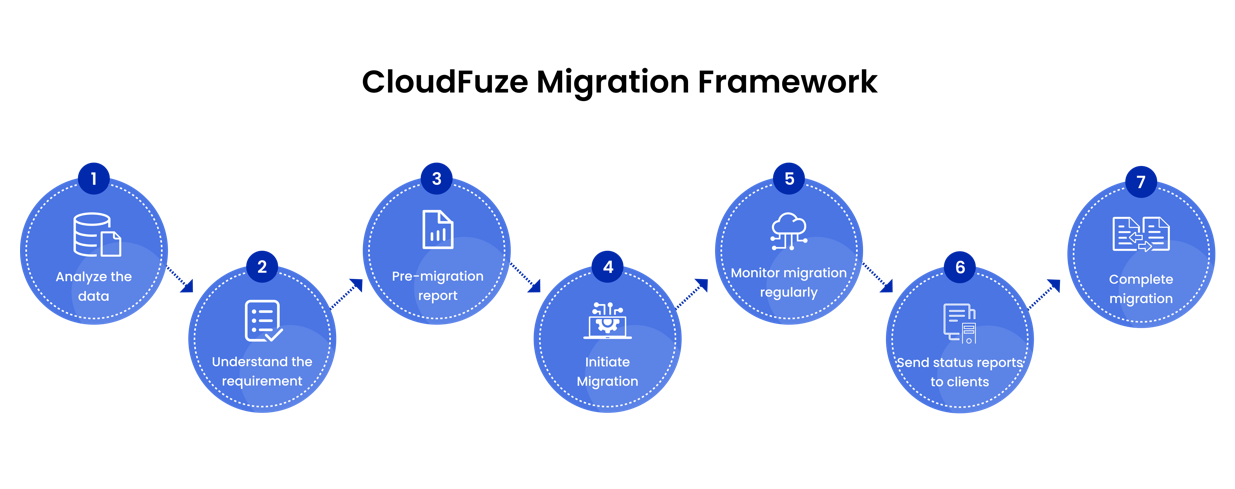
For Dropbox to Google Shared Drives migration, CloudFuze provides a managed migration service. It includes a dedicated migration team that works directly with your IT admins to plan, execute, and validate the migration. A migration manager is assigned to the project who provides daily progress reports and coordinates the work schedule with your team.
Dropbox to Google Shared Drives Migration Success Stories: Case Studies
CloudFuze has managed Dropbox to Google Shared Drives (Google Workspace) migrations for some of the world’s most recognizable organizations.
Intuit Success Story:
Intuit needed to consolidate data from Dropbox and other cloud platforms into Google Workspace as part of a broader infrastructure standardization. Higher user volumes combined with Dropbox and Google API rate limits created significant migration throughput challenges.
CloudFuze developed a multi-account parallel migration strategy that allowed the team to maintain migration velocity without hitting API rate limits. Read the full Intuit case study.
The Washington Post:
The Washington Post migrated 240+ TBs of files and 1,500+ users from Dropbox to Google Workspace with CloudFuze as the migration partner. The scale of the migration, combined with deeply nested folder structures and complex permission requirements across diverse teams, made the migration journey highly challenging.
CloudFuze restructured the folder architecture to fit Google Shared Drive’s model, remapped permissions accurately across all teams and preserved all permissions and context. Read the full Washington Post case study.
View all CloudFuze case studies.
Planning the Migration
To avoid going wrong in any stage of the migration process, it is important to plan it properly. Here are some of the necessary migration planning steps to take.
A) Pre-Migration Analysis
The first step of planning is to audit your source cloud environment (Dropbox). Understand the Dropbox environment’s structure, including the total number of active users, data volume, external collaborators, and more. Gaining these insights helps you prepare the migration scope accordingly.
B) Roadmap and Timeline
Roadmap and timeline give direction to the migration project, so it becomes important to properly plan them. If you have a large volume of users and data to migrate, we recommend planning the migration in batches, and preparing the roadmap and setting timeline expectations accordingly.
C) Stakeholder and User Communication
Communication is integral to migration success. Clearly communicate about the migration plan, roadmap, and timeline not just with stakeholders but also with end users. Also have important points of contact arranged with the migration team, including migration managers, engineering head, escalation point of contact, and more.
Preparing for the Migration
Ensuring proper preparedness is equally important. With proper preparation, you can ensure that the migration kickoff becomes smooth, and the entire process runs without interruption. Here are some of the important migration preparation steps to take.
A) Choose the Right Migration Tool
One of the most important preparation steps is to choose the right migration tool. Evaluate tools based on your migration requirements, specifically against parameters like migration performance for large datasets and user volume.
Also check other areas, such as authentication process, encryption, deployment options, user mapping options, and more.
B) Map Users
It is critical to map the users properly as the migration accuracy largely depends on it. If you have a large volume of users to migrate and their source and destination email IDs do not match perfectly, we recommend choosing the CSV-based mapping option. Our migration platform, CloudFuze Migrate, also provides auto user mapping options.
C) Prepare Login Details
Make sure to have admin login details of both the source cloud (Dropbox) and destination cloud (Google Share Drives) ready. Ensuring this preparation helps make the cloud authentication process smooth.
Steps to Migrate Data From Dropbox to Google Shared Drives
Follow the steps below to move Dropbox data to Google Shared Drives successfully.
Migration prerequisites
To initiate the transfer of Dropbox files to Google Shared Drives using CloudFuze, you must have the following prerequisites:
- A CloudFuze Account
- Dropbox admin login credentials
- Google Shared Drive admin login credentials
Note: Our monthly subscription plans don’t apply for business migration. Reach out to us with your migration needs for a demo or a customized quote to switch to Google Shared Drives from Dropbox.
Follow the steps below to move Dropbox data to Google Shared Drives successfully.
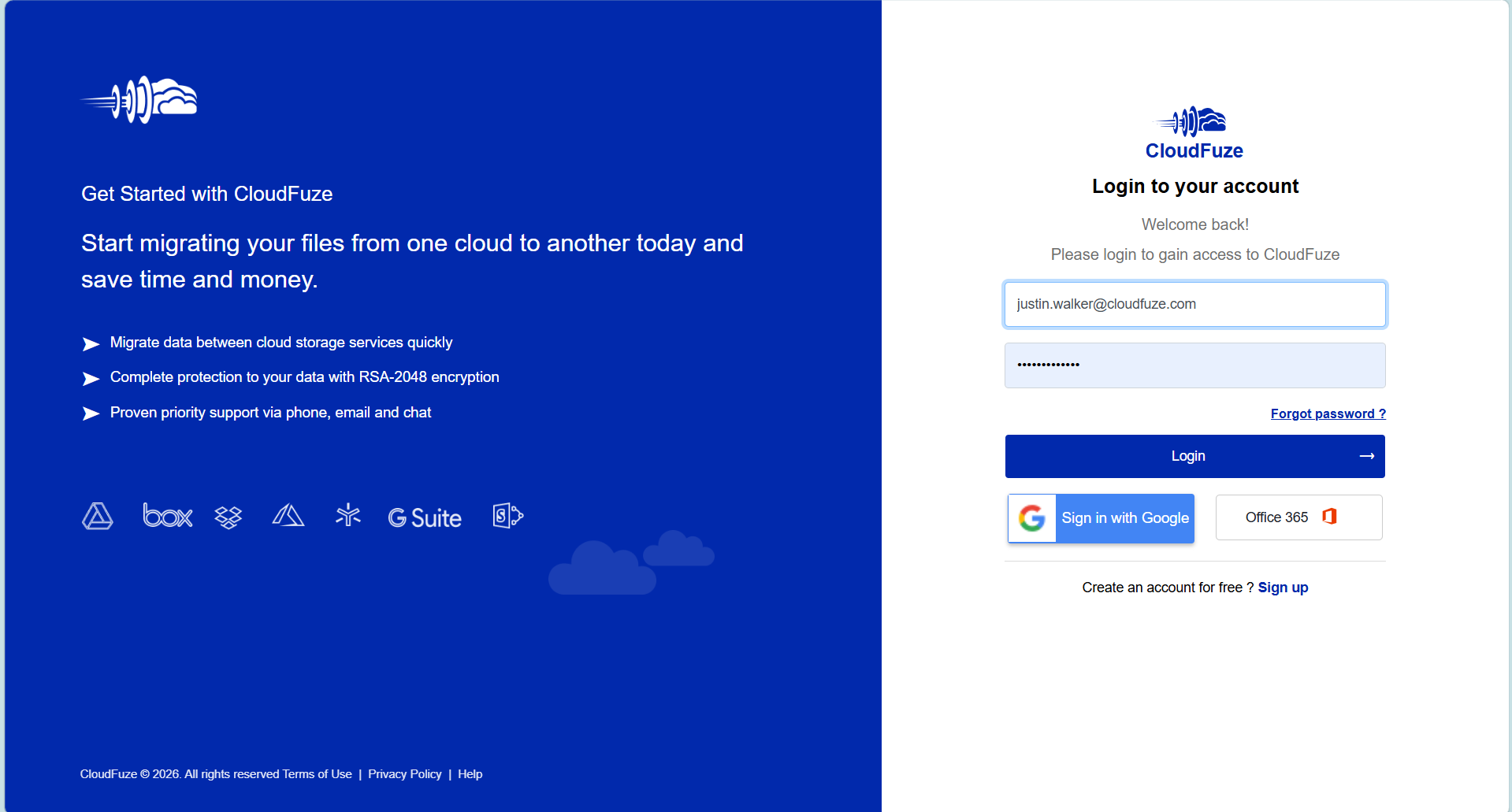
Step 1: Log into CloudFuze
The process to migrate Dropbox to Google Shared Drive starts with accessing the CloudFuze webapp.
Open the CloudFuze webapp to create or log into your account. We offer a limited free trial to test the service. As a business user, you can reach out to our sales team requesting an enterprise trial with more features.
Step 2: Add Dropbox Business Account to CloudFuze
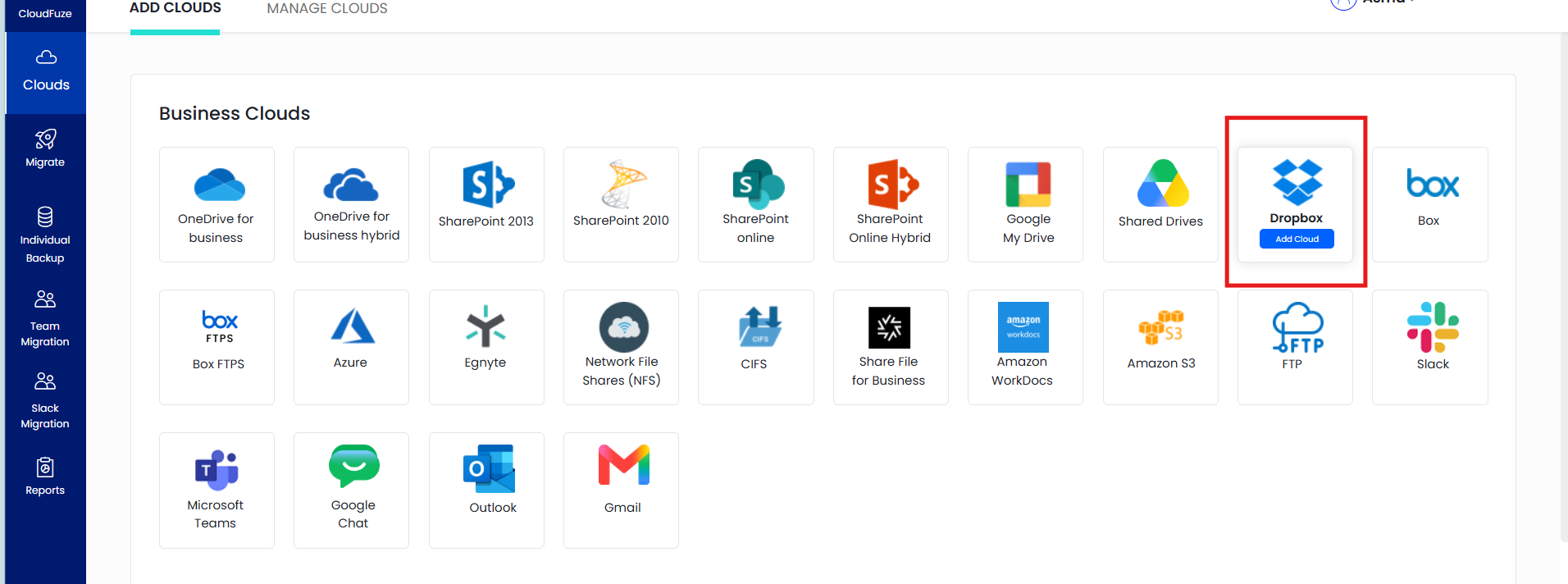
Click on the Dropbox logo that you can find in the business clouds section. When planning for a business-focused Dropbox to Google Shared Drive file transfer, avoid adding Dropbox from the personal clouds list.
Step 3: Authorize Dropbox Business Account
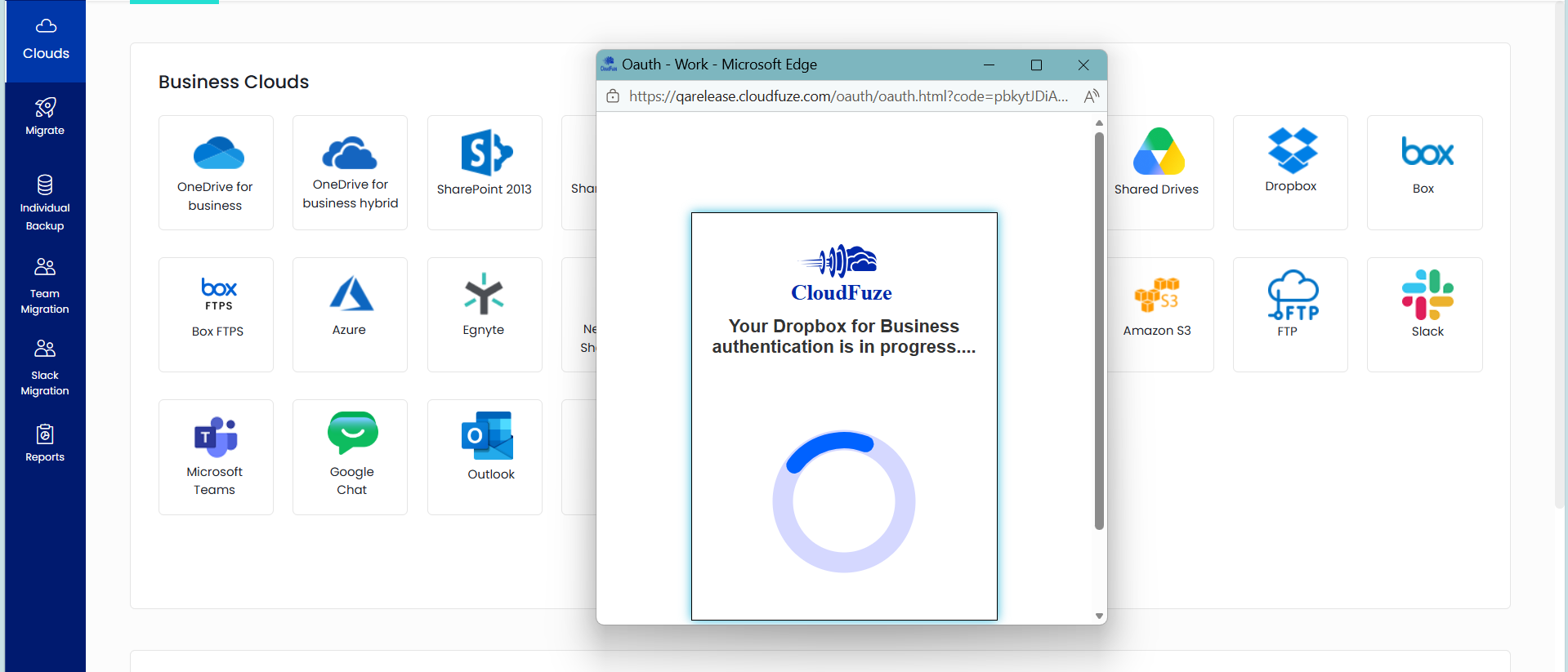
Enter your Dropbox account’s admin login credentials in the popup window and click on the Sign-in button. By doing so, you are providing the needed access for CloudFuze to copy files from Dropbox to Google Shared Drives.
Step 4: Add the Google Shared Drives Account
Similar to the previous steps, you must add Google Shared Drive. Click on the Google Shared Drive logo in the business clouds list.
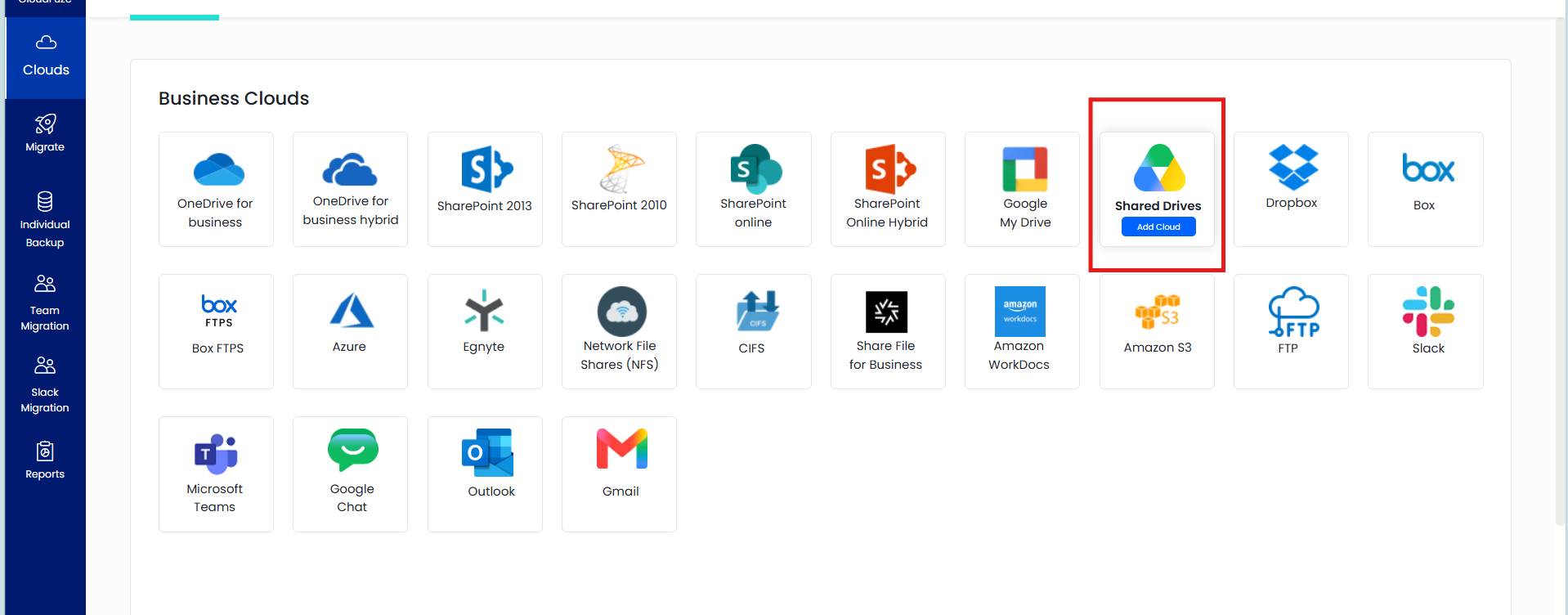
Step 5: Authorize Google Shared Drive
Enter your Google Shared Drives admin login credentials and grant CloudFuze platform Google Workspace Marketplace permissions.
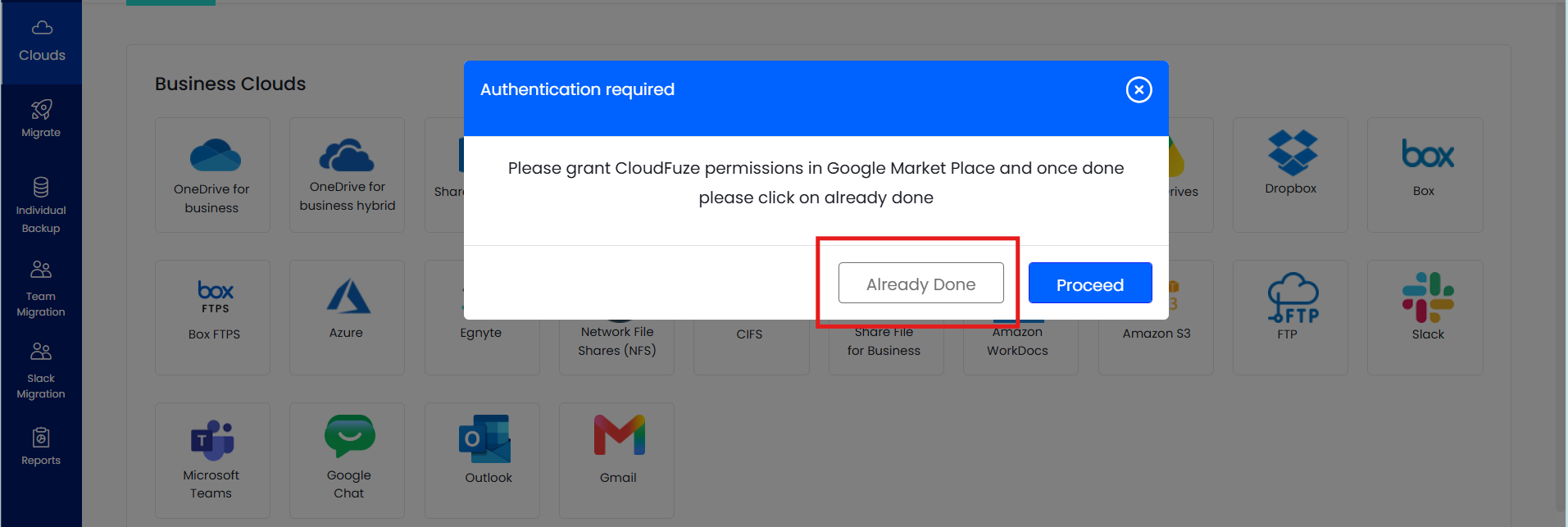
Step 6: Allow CloudFuze to Access Your Account
Click on the Allow button to finish adding the Shared Drive account to CloudFuze. CloudFuze uses OAuth protocol to access your account via API calls. No human will be able to access your data during the process of copying Dropbox to Google Shared Drives.
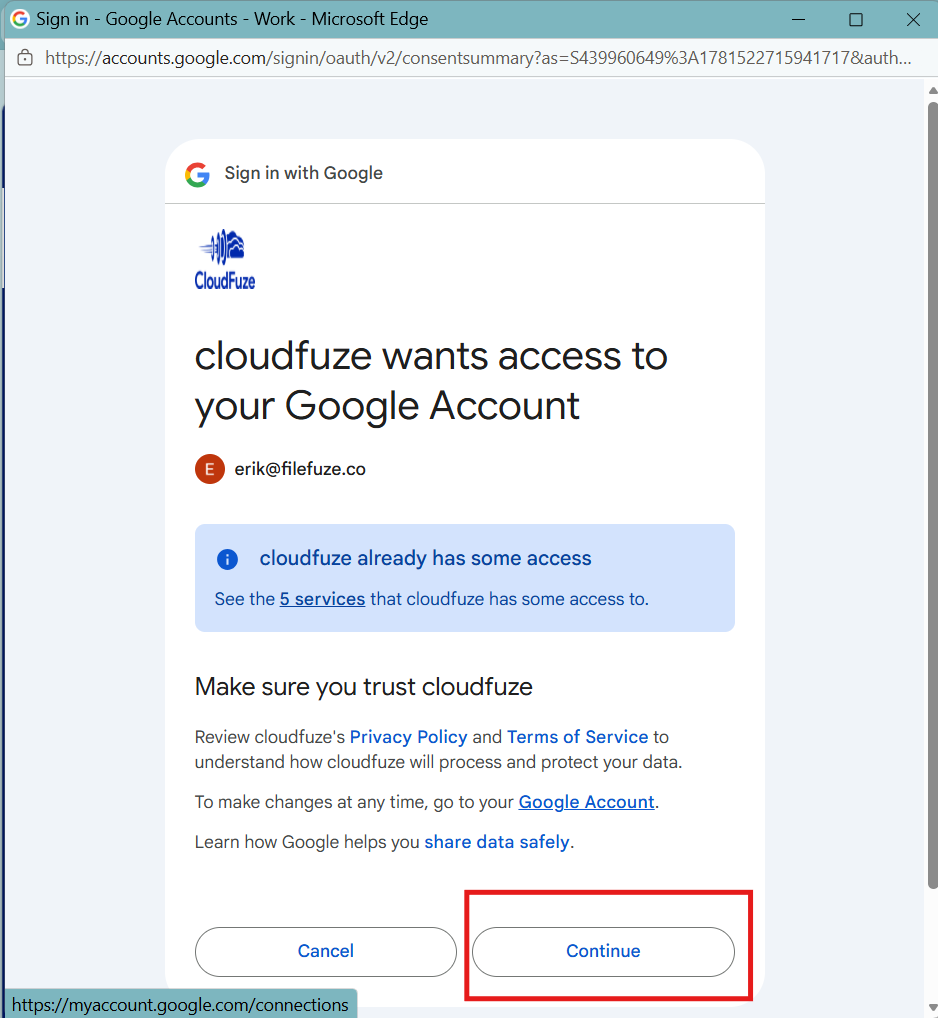
Step 7: Verify the Cloud Addition Process
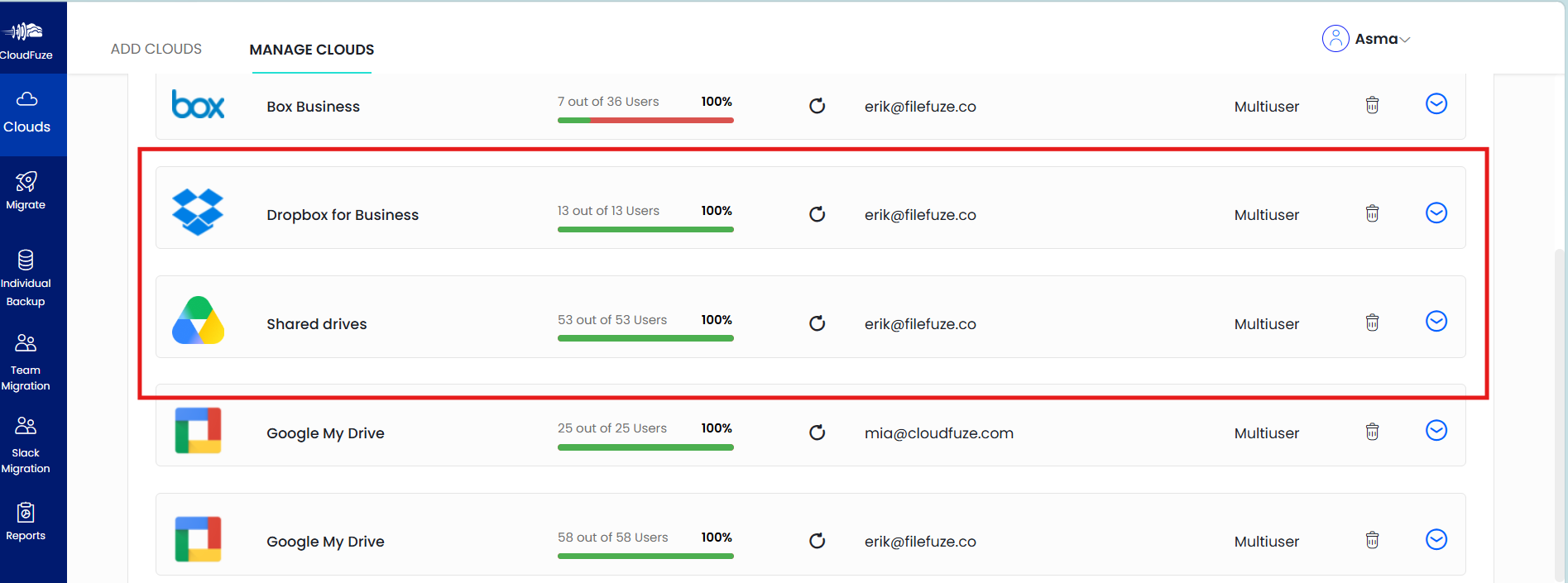
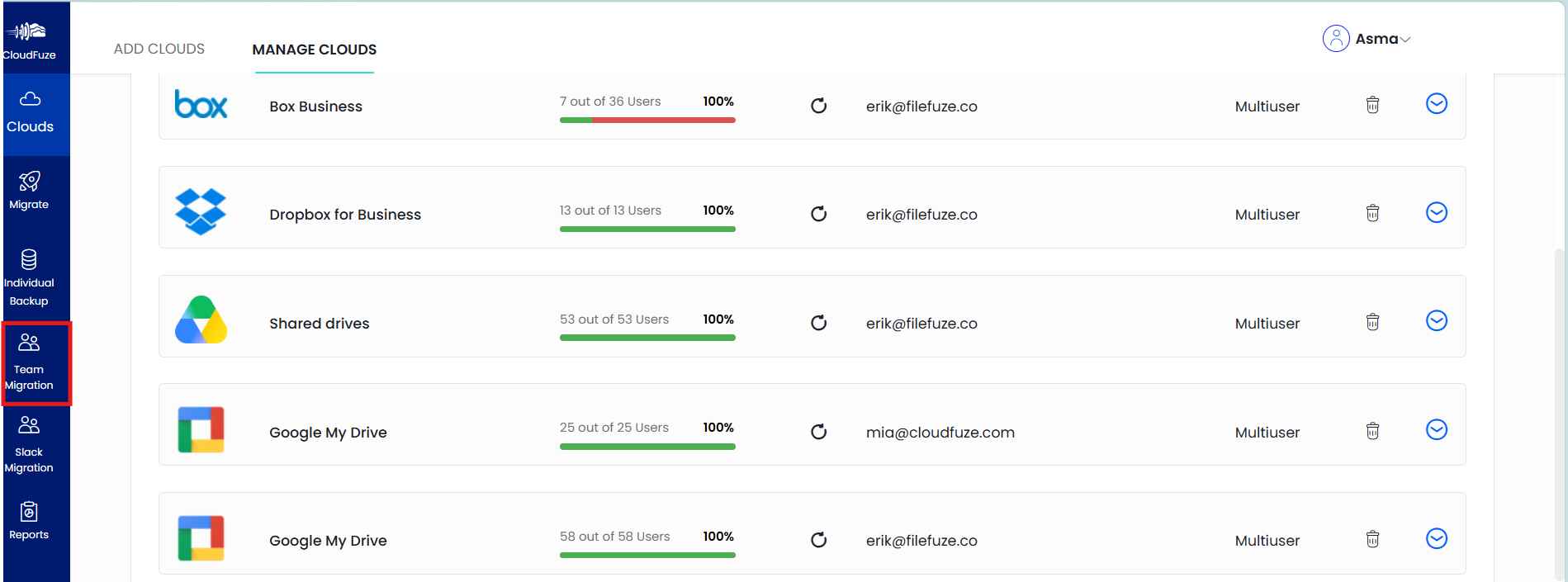
Quickly click on the Clouds icon in the left menu bar. Next, go to the Manage Clouds tab. You should be able to see both Dropbox and Shared Drives accounts there.
Ensure both clouds are added properly. CloudFuze’s Dropbox to Google Shared Drive migration tool accesses data from both clouds at the API level for fast and secure transfer.
Step 8: Click on the Team Migration Icon
Click on the Team Migration icon to copy files from Dropbox to Google Shared Drives. Note that you must configure a few settings before the migration begins.
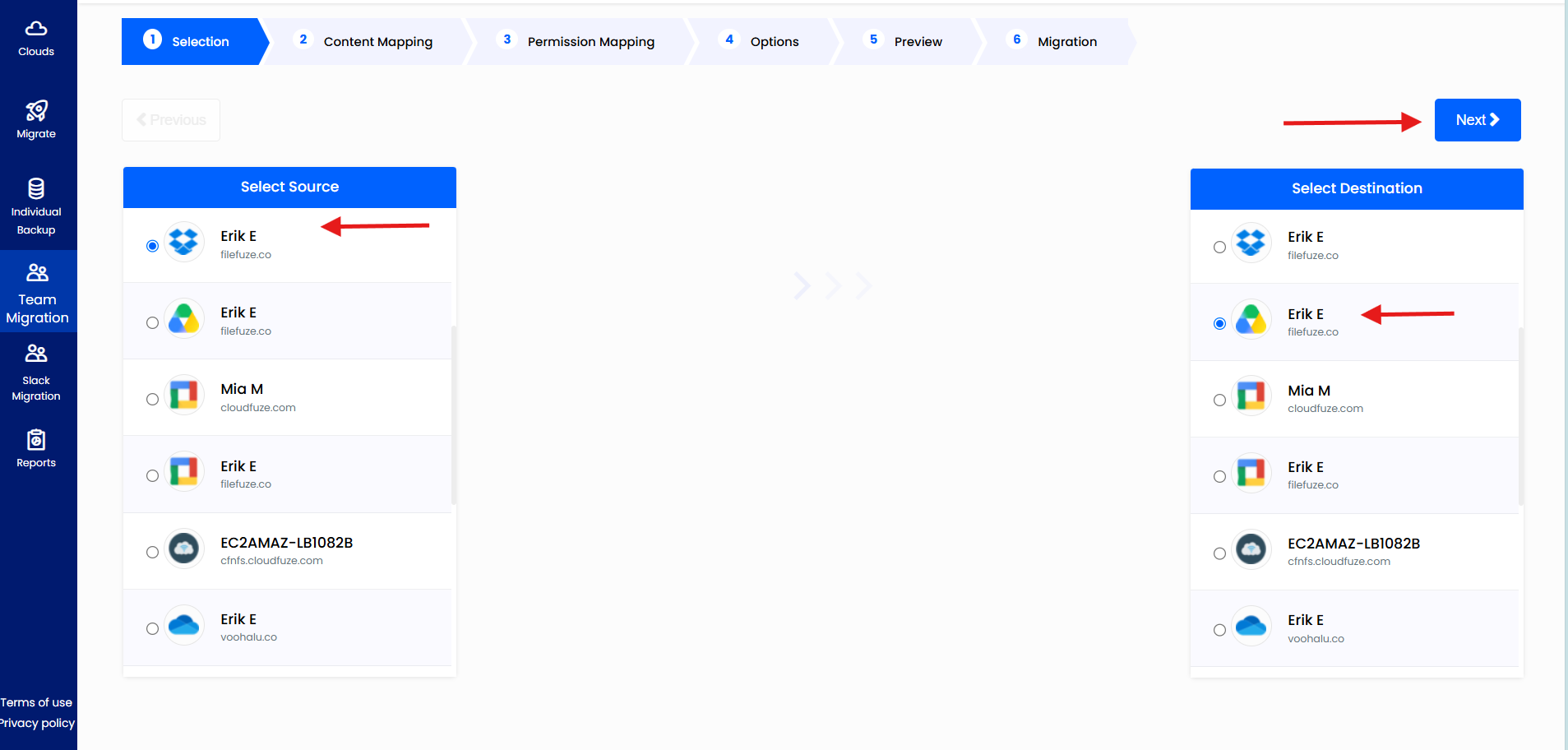
Step 9: Select Source and Destination Cloud Accounts
Select Dropbox as the source cloud and Google Shared Drives as the destination. You need to be cautious while choosing the source and destination clouds to ensure you transfer files from Dropbox to Google Shared Drives and not the other way around.
Step 10: Upload User Mapping CSV File
You need to create a CSV file with a specific format to match users in the source and destination clouds. Much of this work is guided and carried out by our managed migration team.
CSV mapping is the best way to migrate Dropbox to Google Shared Drive with customized user mapping that aligns with business-specific migration goals.
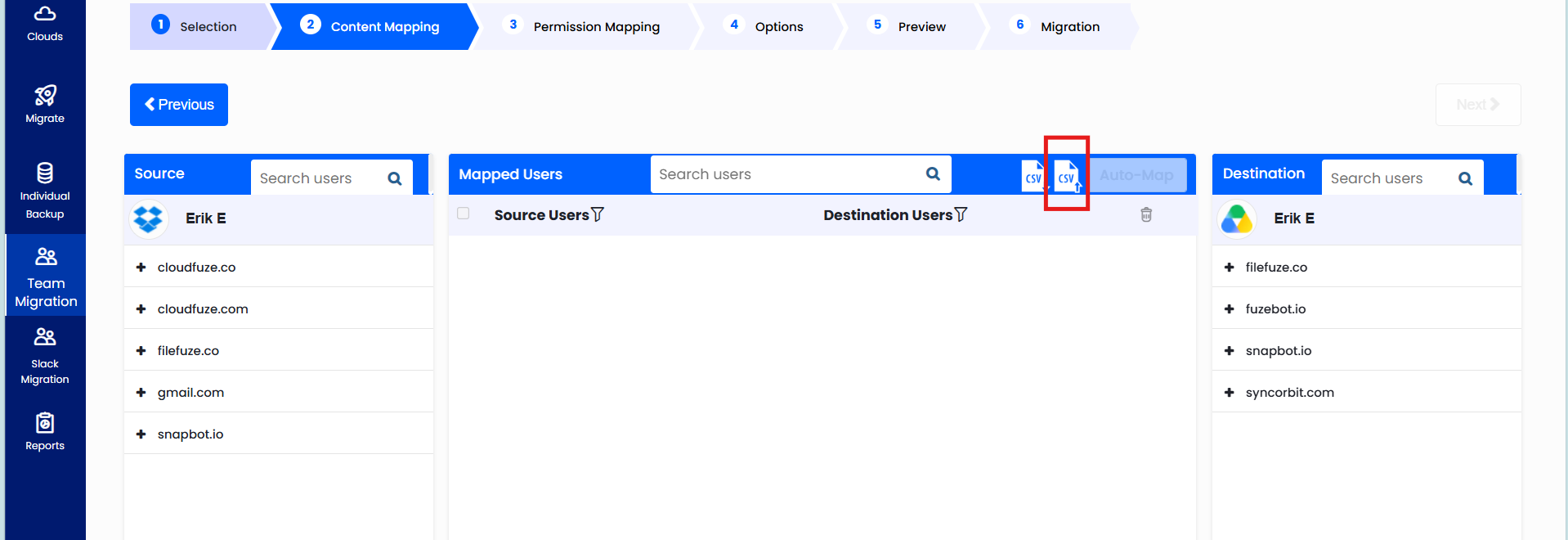
Step 11: Creating the CSV File
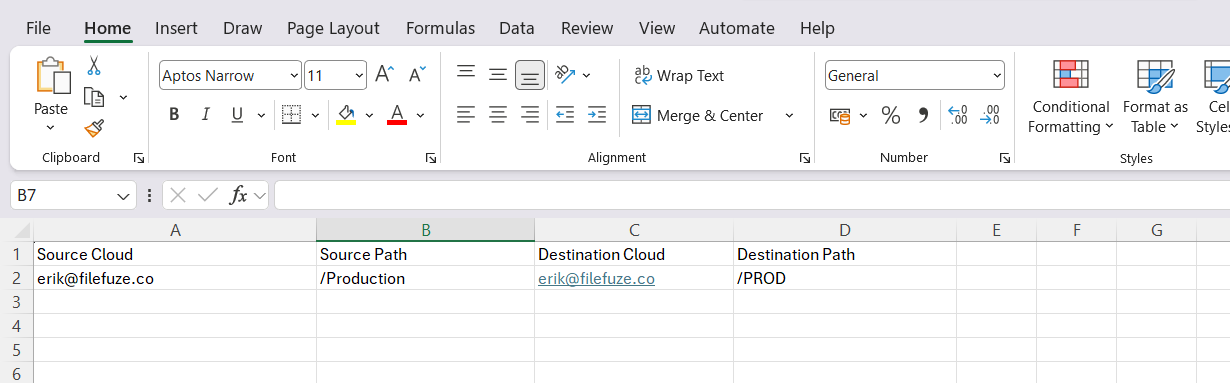
Create the CSV file with the below details:
- Enter the source user email
- Enter source path
- Enter destination user email
- Enter the destination path
Step 12: Allow CloudFuze to Validate the CSV File
Once uploaded, CloudFuze takes a few moments to read and validate the CSV file. If there are any mistakes in the CSV format, our migration tool returns an error.
It is crucial to map user accounts properly in the CSV file to switch to Google Shared Drive from Dropbox with complete accuracy.
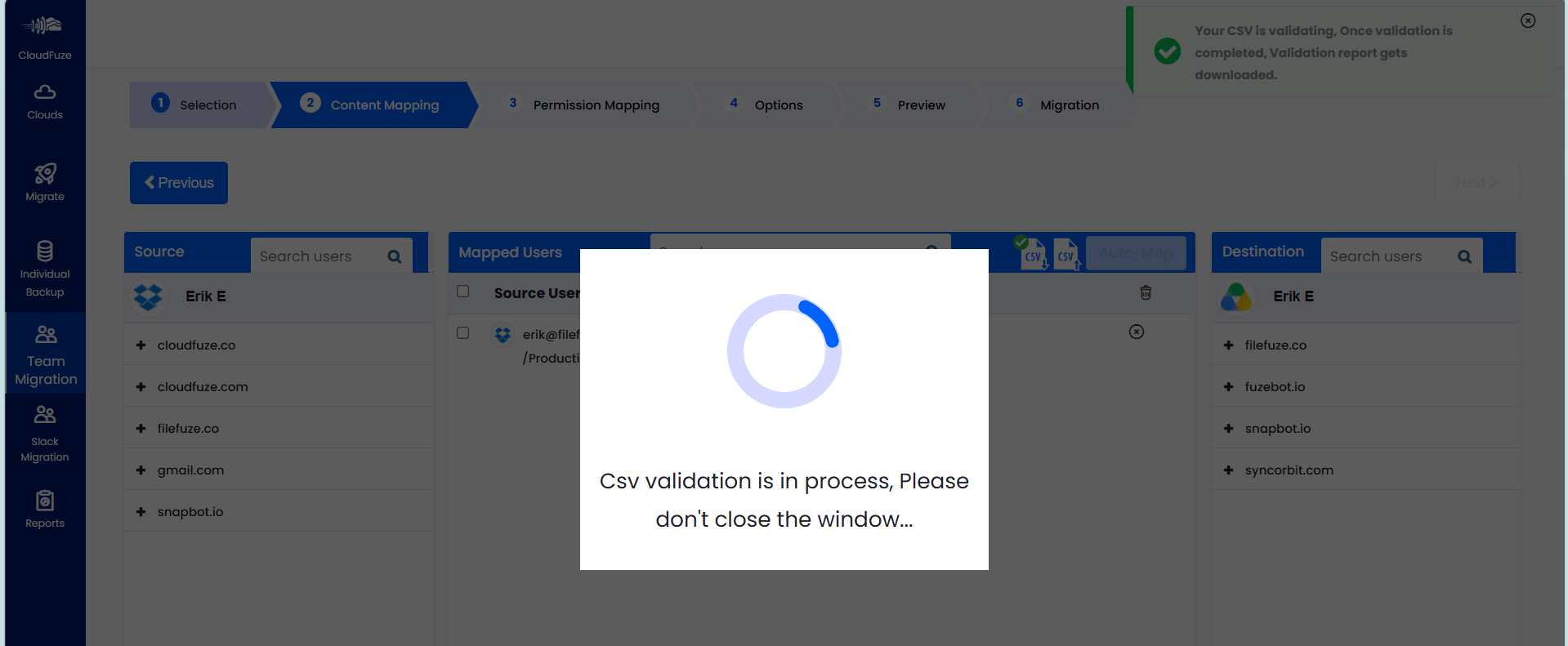
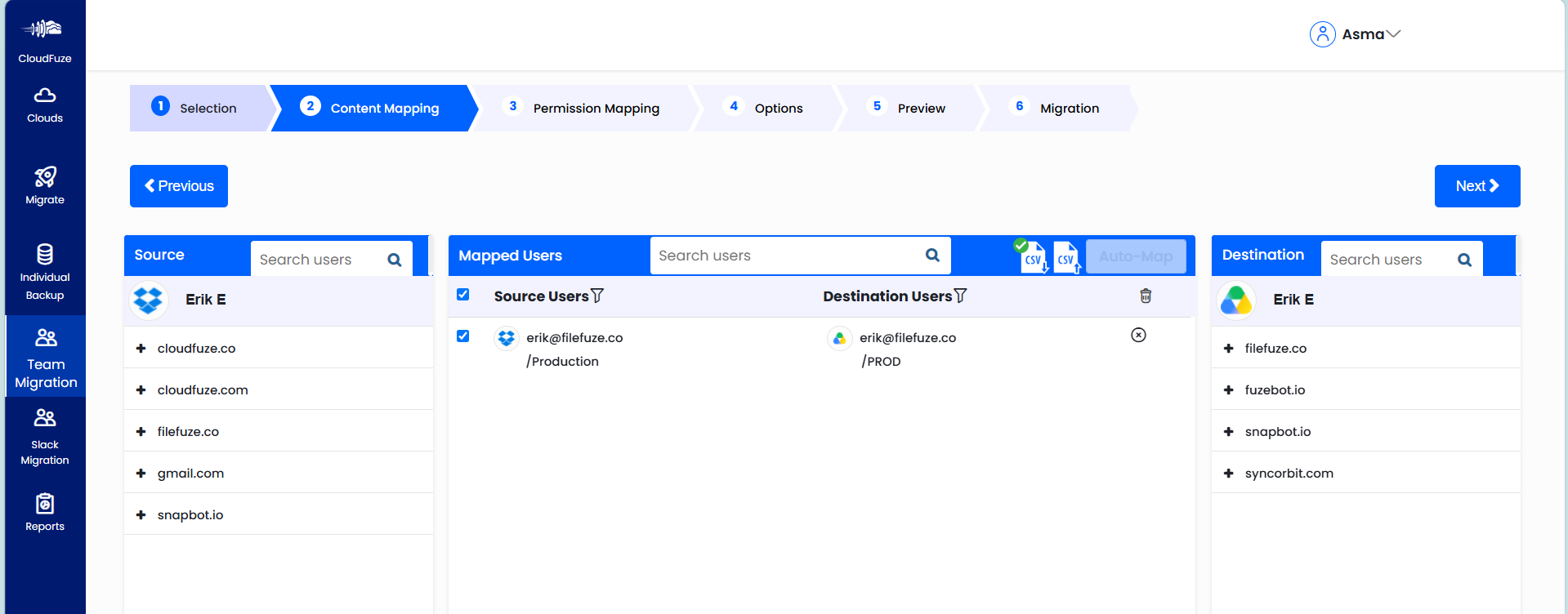
Step 13: Download the CSV
Download the CSV and click on the Next button for further migration.
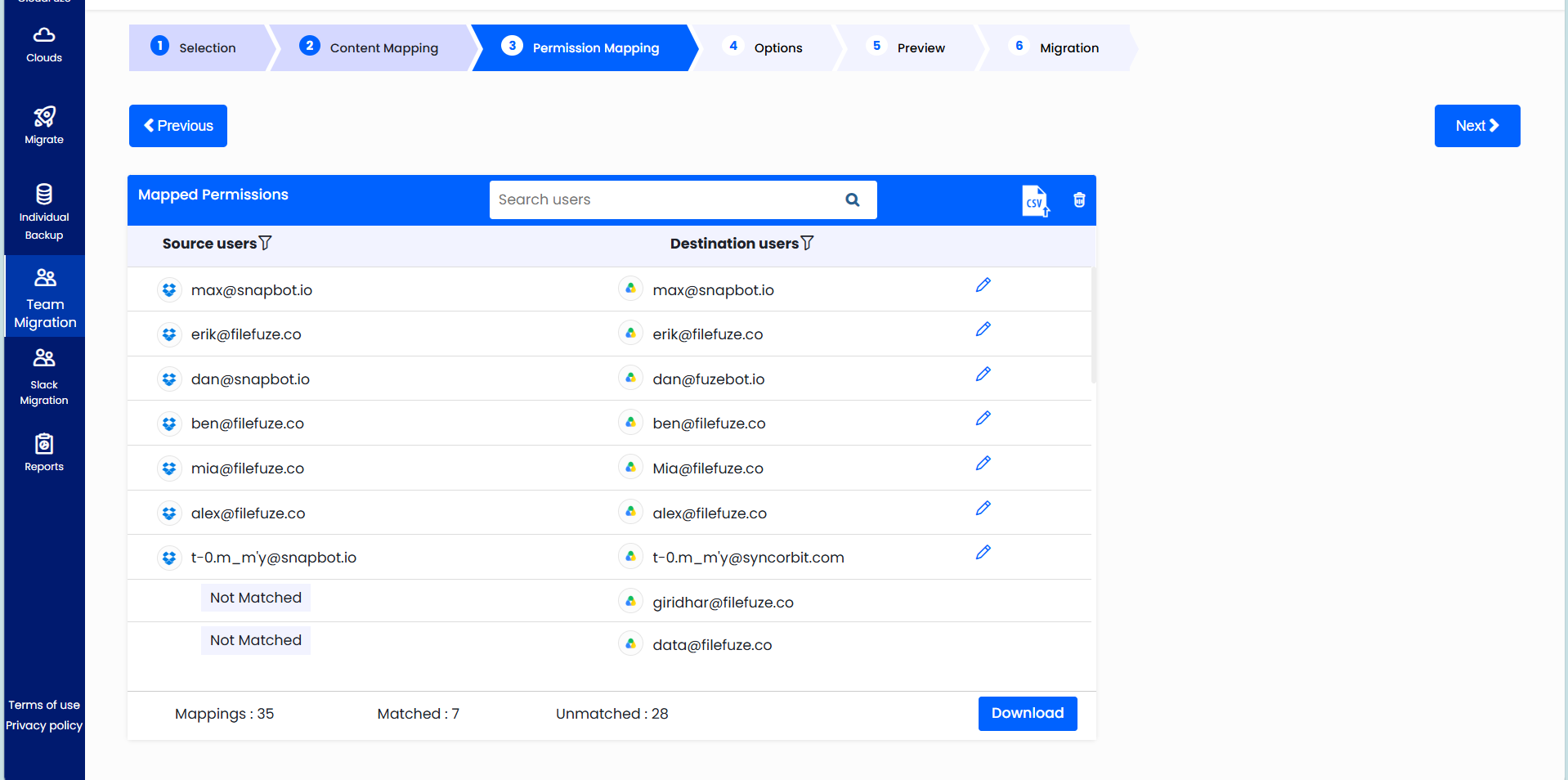
Step 14: Map Permissions
CloudFuze migration platform automatically maps permissions based on user roles and access levels. You can either leave the mapped permission pairing as it is or edit them according to your needs.
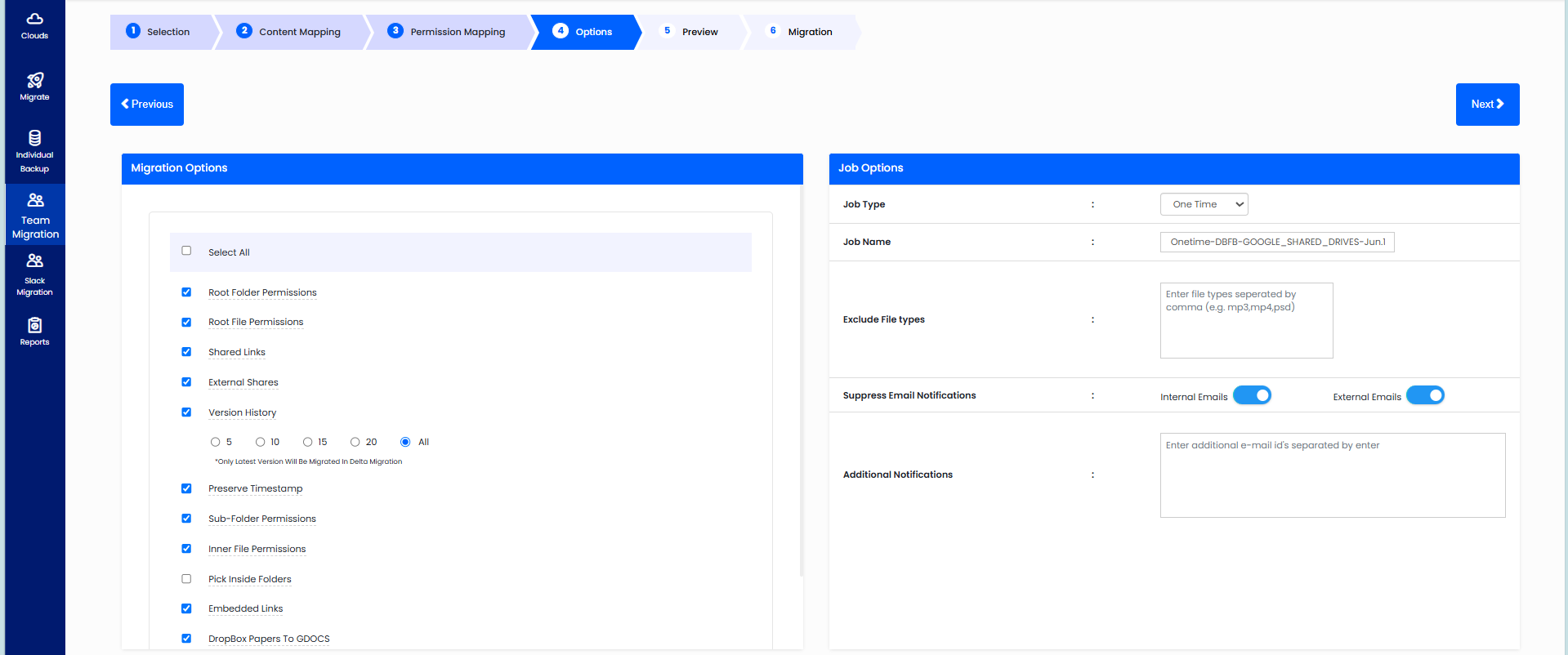
Step 15: Configure the Migration
Choose a name for the Dropbox to Google Shared Drive file transfer project and select other preferences based on your migration needs. Once done, click on the Next button.
Step 16: Preview and Confirm the Migration
Preview the options and click on the “Start Migration” button if everything looks good.
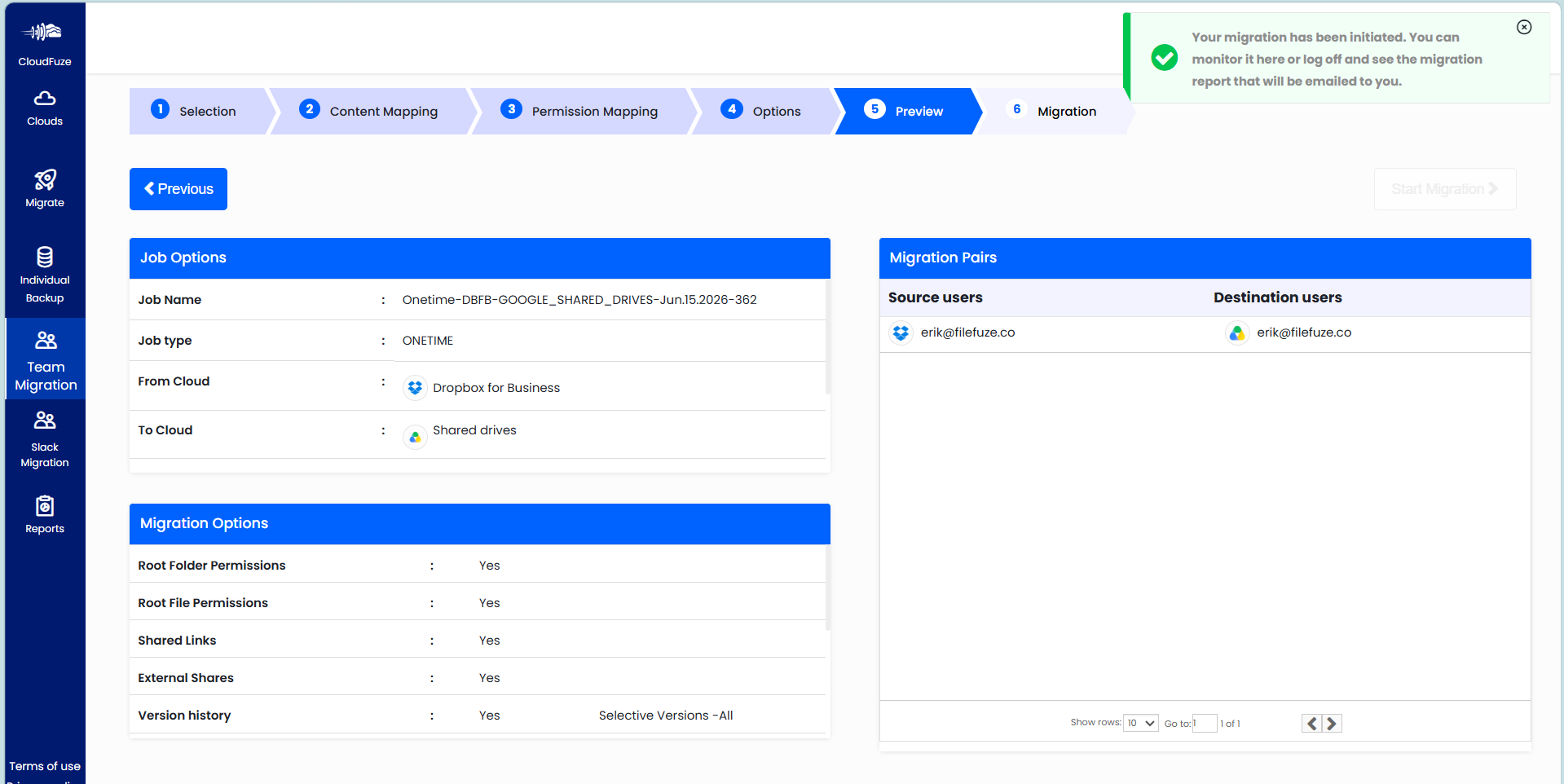
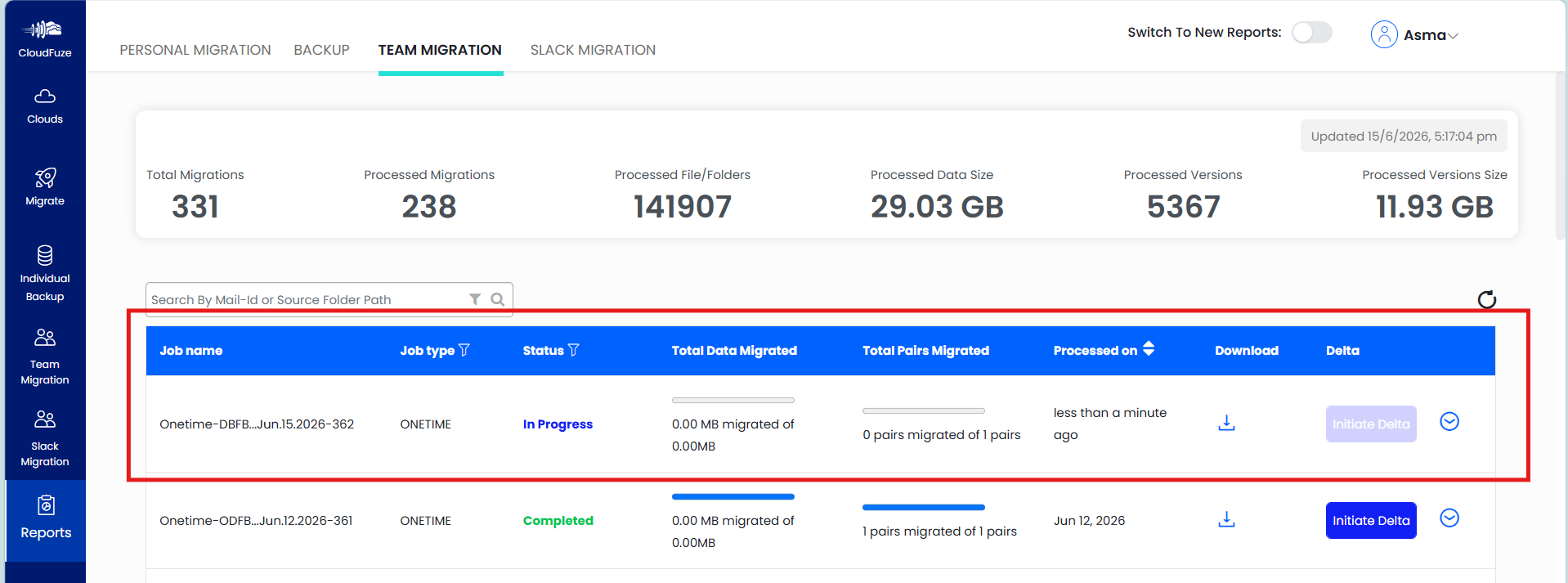
Step 17: Migration Is In Progress
The ‘In-progress’ status indicates that the migration is in progress. Keep in mind that business users of CloudFuze’s Dropbox to Google Shared Drive migration tool have the privilege to receive detailed daily migration reports from the migration managers.
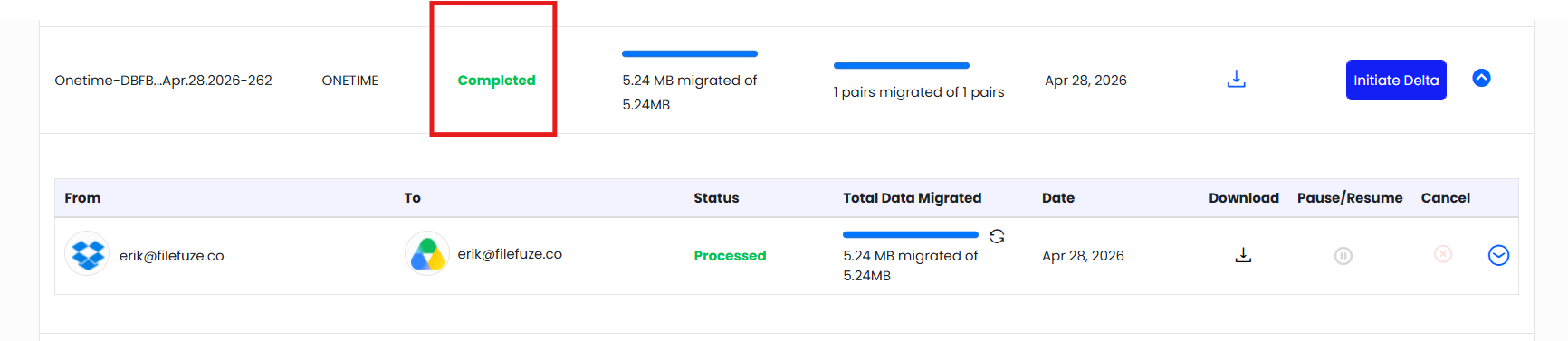
Step 18: Dropbox Business to Google Shared Drives Migration Has Been Completed
Once migration is completed, the status will show as “Completed.” You can download the migration report and check the list of all files and folders transferred.
About the Author: Pankaj Rai


