
How Exact Sciences Migrated 7000 Users from Box to Microsoft 365 with CloudFuze

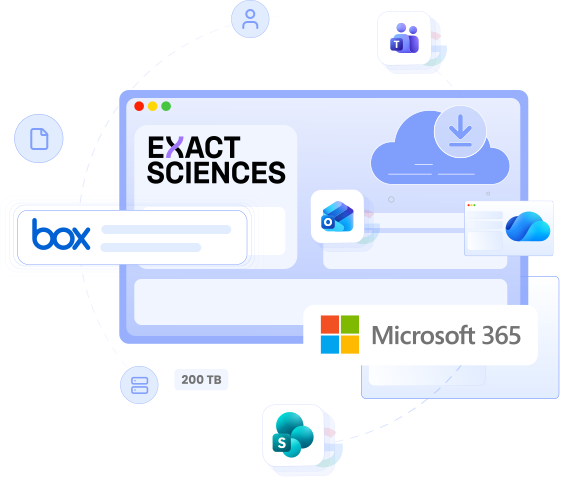
Exact Sciences, a leading U.S. cancer screening and diagnostics company, migrated 7,000 users and 200 TB of data from Box to Microsoft 365 with CloudFuze. 
 
The migration brought the company’s files and collaboration into one connected Microsoft 365 environment, right next to the Teams, Outlook, and Office tools its employees use every day. 
 
CloudFuze handled the migration from start to finish, including mapping shared Box folders to SharePoint Online and personal folders to OneDrive, preserving permissions and other rich metadata and context.

Exact Sciences

Customer Overview

Exact Sciences is a leading cancer screening and diagnostics company, best known for Cologuard, its non-invasive colorectal cancer screening test. Headquartered in Madison, Wisconsin, the company became a wholly owned subsidiary of Abbott in March 2026.

Migration Challeges

Migration Challenges

Exact Sciences’ Box environment held 200 TB of shared and personal content that had to land in the right Microsoft 365 destination, along with permissions at the folder and file level and external shares that had to carry over without disruption.

At this scale, the migration also had to account for long folder paths, special characters, Box notes, and embedded links while 7,000 users kept working without downtime.

CloudFuze’s Role

CloudFuze ran the migration as a fully managed service with a dedicated project manager. Two extra large  instances on a high-performance enterprise server were reserved to keep transfer speeds steady across all 200 TB.

The full scope of how our team handled content routing, permission preservation, Box notes, and path and character issues is covered in this case study.

CloudFuze's Role
Migration Results

Migration Results

By partnering with CloudFuze, Exact Sciences successfully migrated 7,000 users and 200 TB of data from Box to Microsoft 365 with permissions, external shares, versions, and timestamps intact and without disrupting ongoing operations. Read the case study for full details.